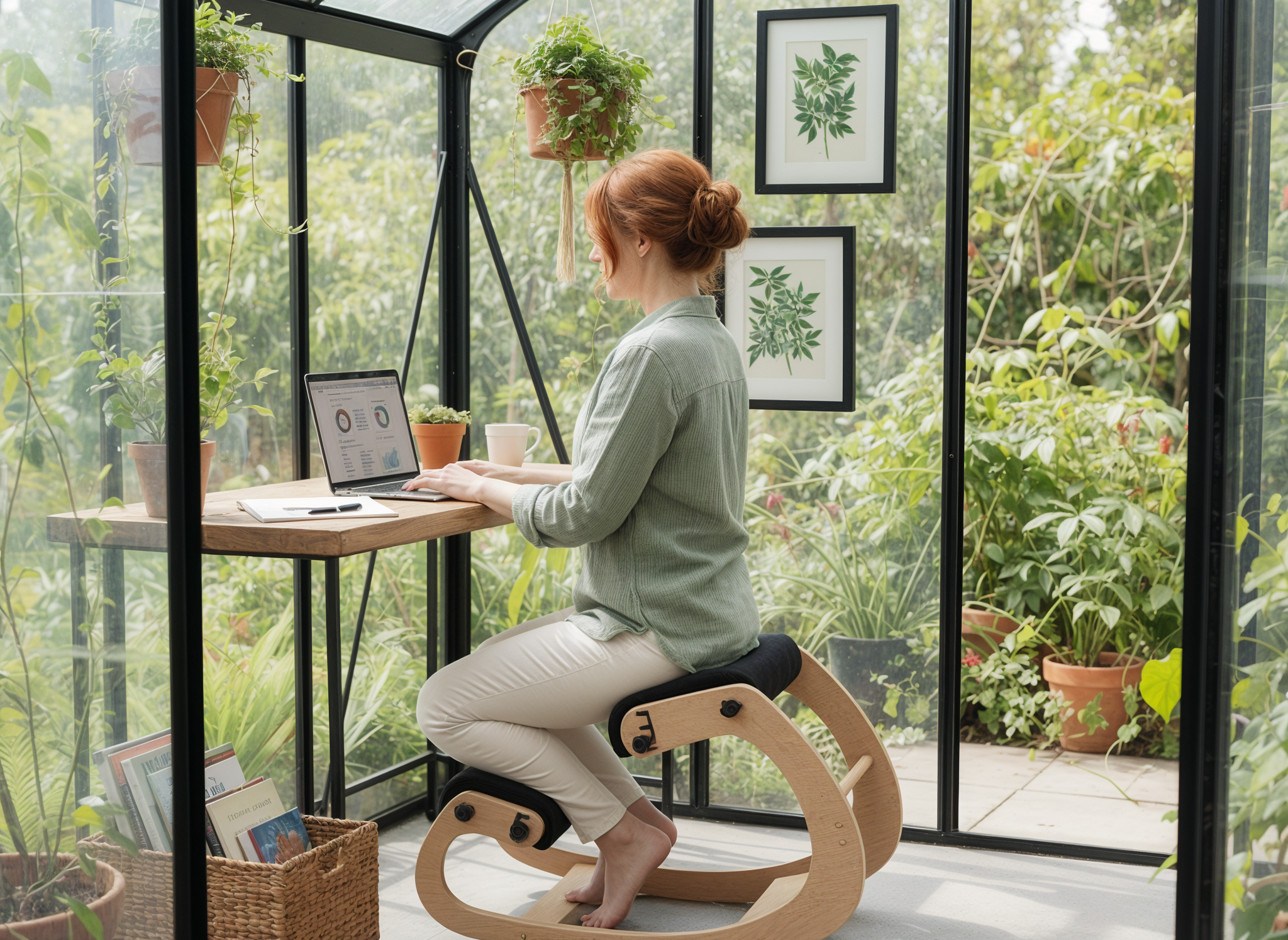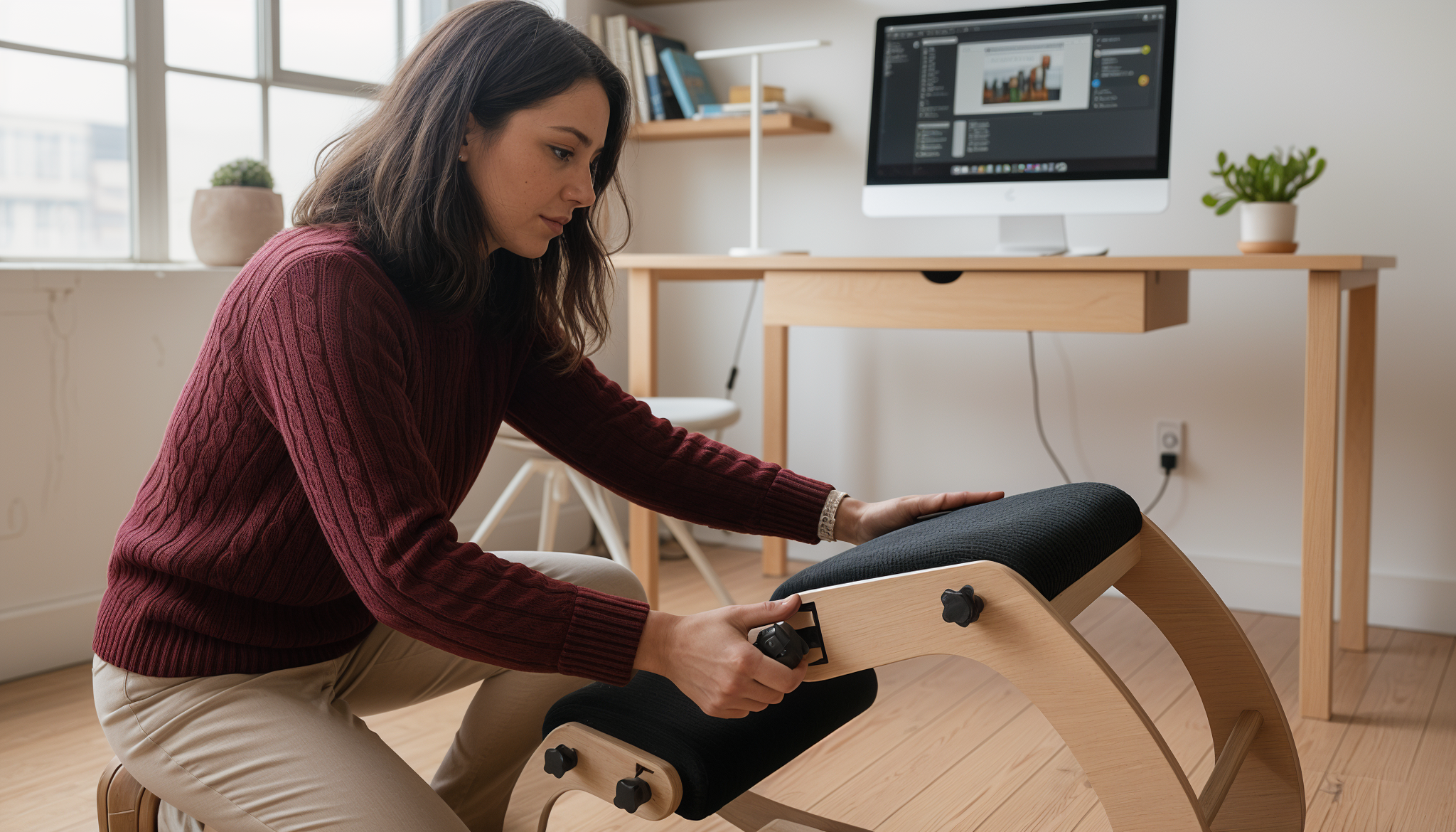
Traditional office chairs force a single sitting position, creating sustained pressure on your spine and hips. But your body needs movement—and wide-seat ergonomic chairs provide the space and freedom to move naturally throughout your workday.
Listen to This Article
Prefer listening? Play this article as audio while you work, commute, or relax. Perfect for multitasking!
Here’s what you’ll discover in this guide:
📋 What You’ll Learn in This Guide:
- → Why conventional chairs restrict natural movement
- → What makes wide-seat designs different
- → The science behind dynamic sitting
- → Understanding critical dimensions
- → Common sitting positions explained
- → Key technical features to look for
- → Workspace integration strategies
- → Who benefits most from wide-seat chairs
- → Complete movement strategy for optimal health
Why Conventional Chairs Restrict Natural Movement
Standard office chairs typically measure 17-19 inches wide with fixed armrests that physically block natural movements. This narrow design forces a single sitting position, creating sustained pressure on your spine and hips.
The restriction leads to discomfort, reduced circulation, and decreased focus over time. Your body isn’t designed for static postures—it needs movement throughout the day.
What Makes Wide-Seat Designs Different
Wide-seat ergonomic chairs solve this problem through three key design elements:
1. Significantly Wider Seating Surface
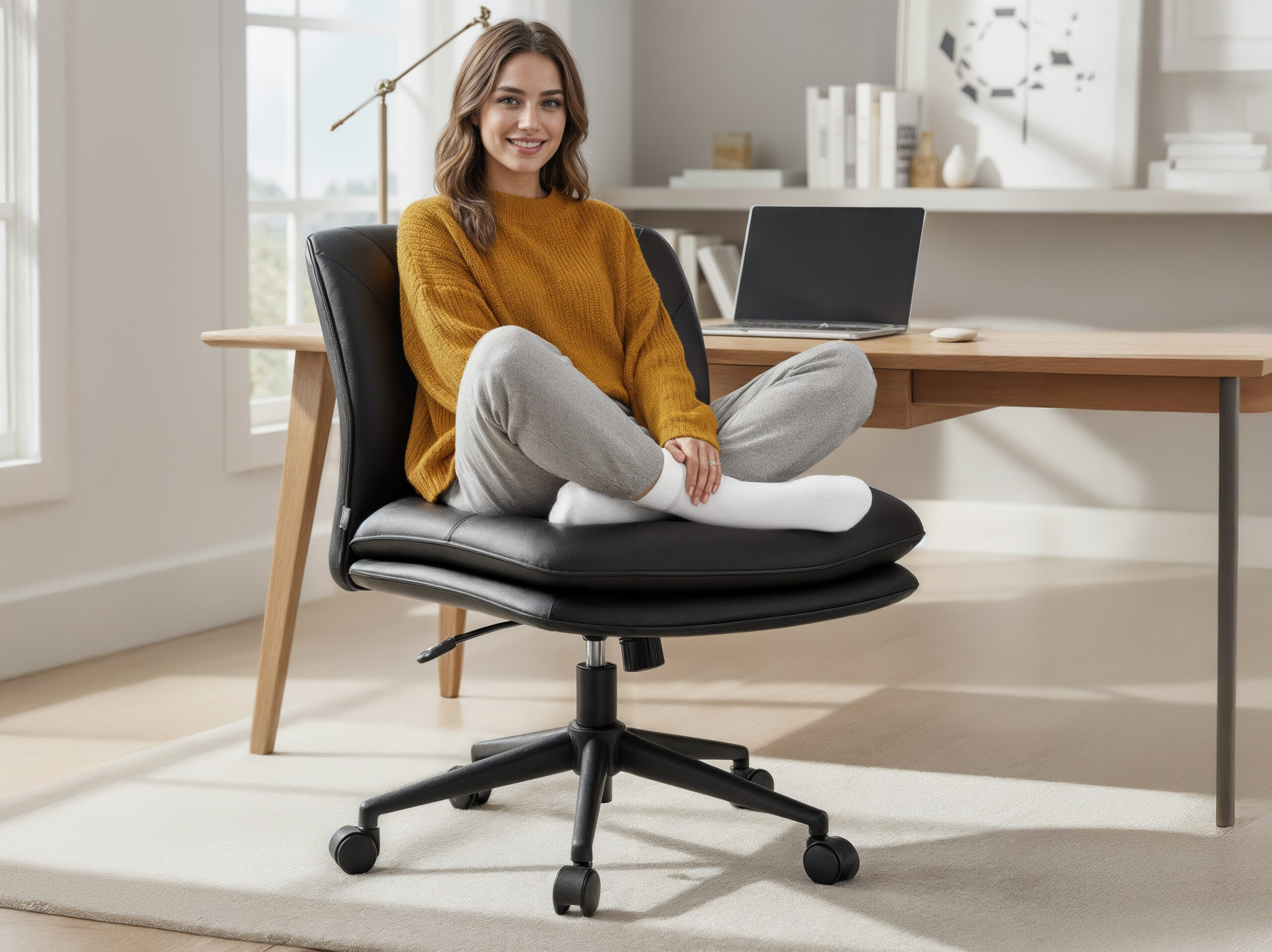
Chairs designed for dynamic sitting typically provide 24-26 inches of seat width—approximately 35% wider than standard office chairs. This extra space accommodates cross-legged sitting, one leg tucked, or traditional positioning with room to shift freely between them.
2. Armless Construction
Removing armrests eliminates physical barriers to leg movement. This design choice allows complete freedom to transition between positions without obstruction—essential for cross-legged and varied postures.
3. Curved Ergonomic Support
A properly curved backrest maintains spinal support across different sitting angles. Whether positioned upright or leaning into alternative postures, the curvature provides consistent lumbar support.
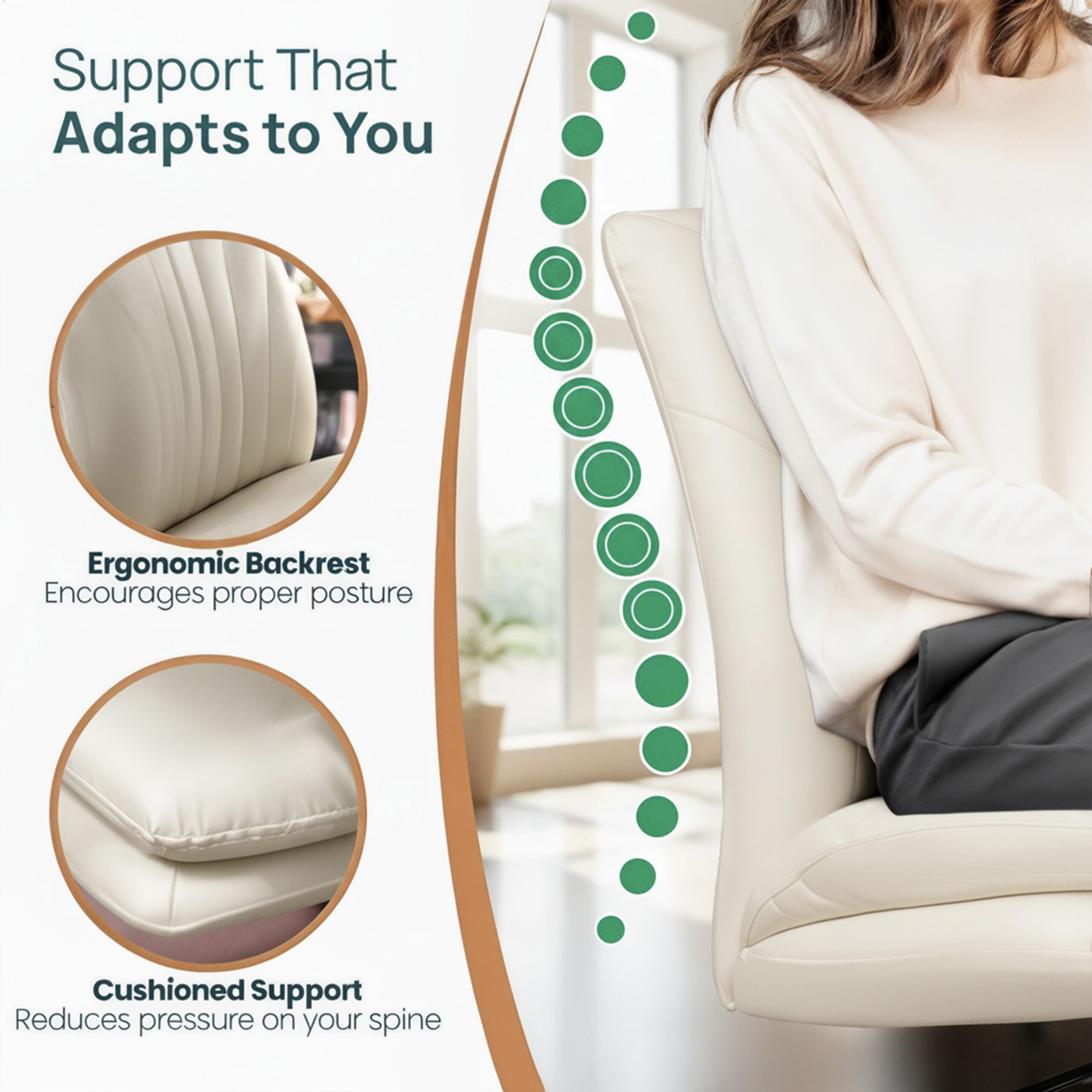
Curved backwards adapts to you
The Science Behind Dynamic Sitting
Research from Cornell University demonstrates that changing positions every 20-30 minutes maintains optimal blood flow and reduces musculoskeletal stress.
Three Primary Benefits:
Pressure Distribution
Static sitting concentrates body weight on specific contact points. Position changes redistribute this pressure, reducing localized stress by up to 37% according to a 2018 Journal of Physical Activity and Health study.
Circulation Maintenance
Movement prevents blood pooling in lower extremities. Regular position shifts maintain active circulation throughout legs and hips during extended work sessions.
Muscle Engagement
Different positions activate different muscle groups, preventing fatigue from sustained contraction in one posture while keeping core muscles engaged.
Understanding Critical Dimensions
Seat Width: The Key Measurement
For comfortable cross-legged sitting, research shows most adults require 22-24 inches minimum. Chairs designed for this purpose typically measure 25-26 inches wide, providing adequate space with room for movement.
One example is the NYPOT armless desk chair (available on Amazon), which measures 25.6 inches wide—a dimension that exemplifies the extra space needed for position variety.
Seat Depth Considerations
Depth typically ranges from 24-26 inches in wide-seat designs, compared to 18-20 inches in standard chairs. This additional depth prevents legs from hanging off the front edge during cross-legged positioning.
Height Adjustability Range
Look for adjustment ranges of approximately 16-20 inches from floor to seat. This 4-inch range accommodates different sitting positions, as cross-legged posture raises your torso height by 2-3 inches compared to traditional sitting.
Size Comparison
| Feature | Standard Office Chair | Wide-Seat Design | Difference |
|---|---|---|---|
| Seat Width | 17-19 inches | 24-26 inches | +35-40% |
| Seat Depth | 18-20 inches | 24-26 inches | +20-30% |
| Cross-Legged Fit | ❌ Too narrow | ✅ Designed for it | Functional |
| Position Variety | 1-2 positions | 5+ positions | Maximum flexibility |
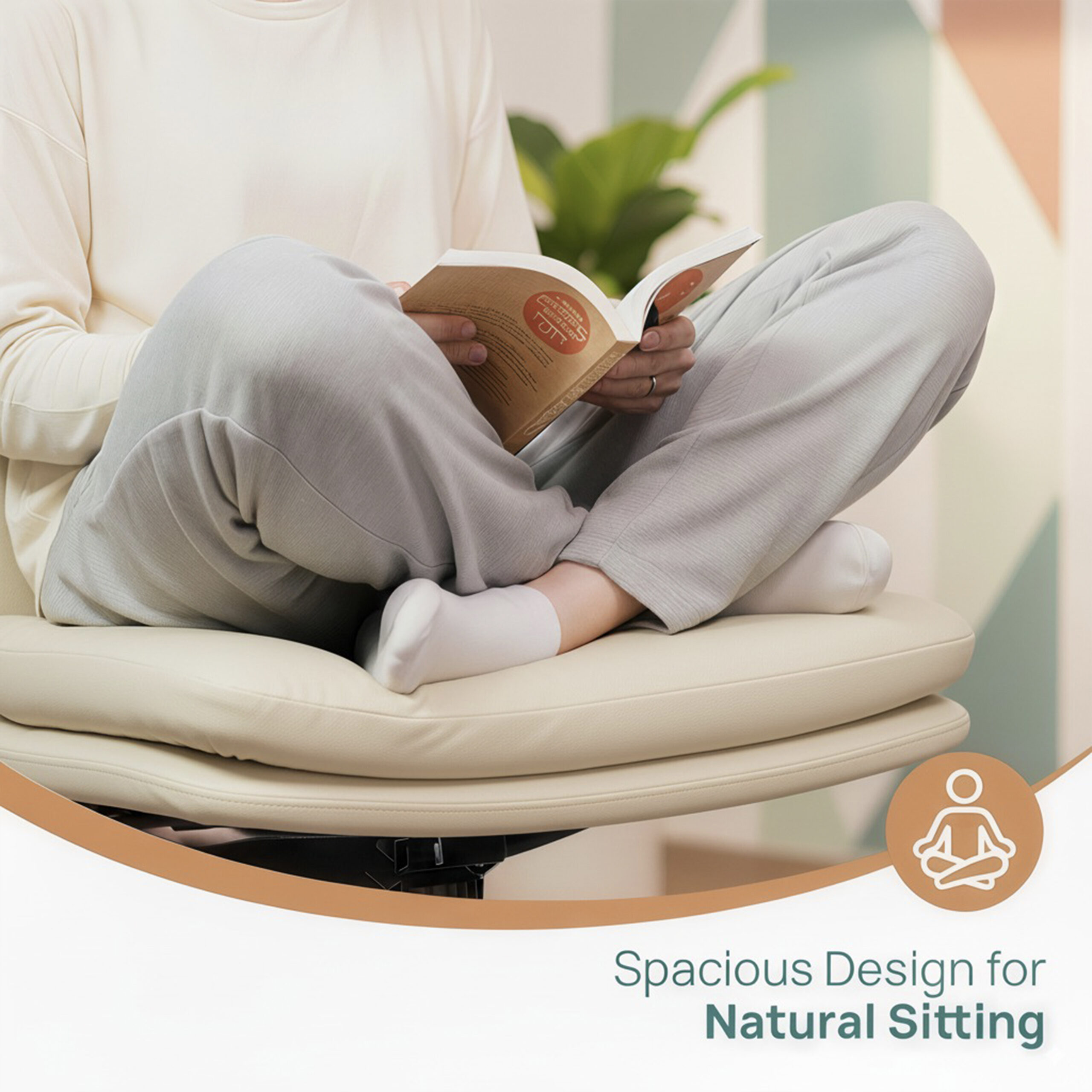
Wide-Seat Ergonomic Chair Supporting Cross-Legged Sitting
Common Sitting Positions Explained
Cross-Legged (Lotus Position)
Chairs with 25+ inch width provide adequate space for full lotus or easy cross-legged positions. This width allows comfortable positioning without feeling cramped or restricted.
Benefits: Opens hip flexors, reduces lumbar stress, engages core muscles.
Duration: 15-20 minutes before switching to prevent hip tightness.
One Leg Tucked
Asymmetric positioning that relieves pressure on one side while maintaining hip flexibility. Adequate seat width allows complete leg tucking without compression.
Benefits: Unilateral pressure relief, hip mobility maintenance.
Duration: 10-15 minutes per side, alternating regularly.
Traditional Seated
Standard upright position with feet flat. Extra width provides lateral space for subtle weight shifts and micro-movements even in conventional posture.
Benefits: Familiar positioning, good for focused tasks.
Duration: Maximum 30-40 minutes before varying position.
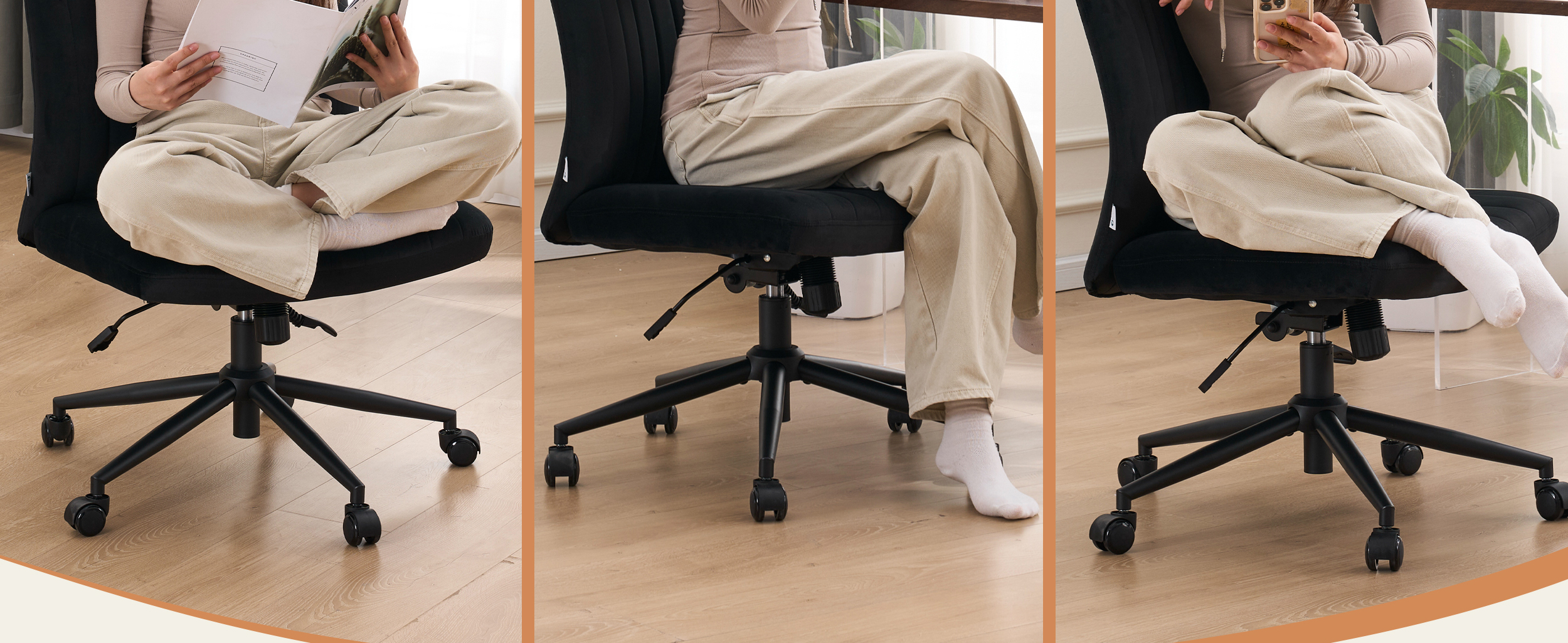
Multiple Sitting Position Options on Wide-Seat Ergonomic Chair
Technical Features That Enable Movement
Adjustable Height Mechanism
Height adjustment of approximately 16-20 inches accommodates the torso height changes that occur with different sitting positions. Different postures can alter your working height by 2-4 inches.
360° Swivel with Mobility
Smooth rotation and wheeled bases enable position transitions without strain. This allows you to shift body angle relative to your desk effortlessly.
Dual-Mode Tilt Systems
Advanced designs offer lockable tilt (0-20° range) or free rocking modes. The ability to lock at various angles provides stability for focused work, while rocking mode supports gentle movement.
Material Considerations
- Frame: Aluminum construction provides durability at reduced weight
- Cushioning: High-density foam maintains shape under varied weight distribution
- Surface: Faux leather or breathable fabrics allow smooth position transitions
- Certifications: Look for BIFMA and SGS certifications, which indicate tested safety and quality standards
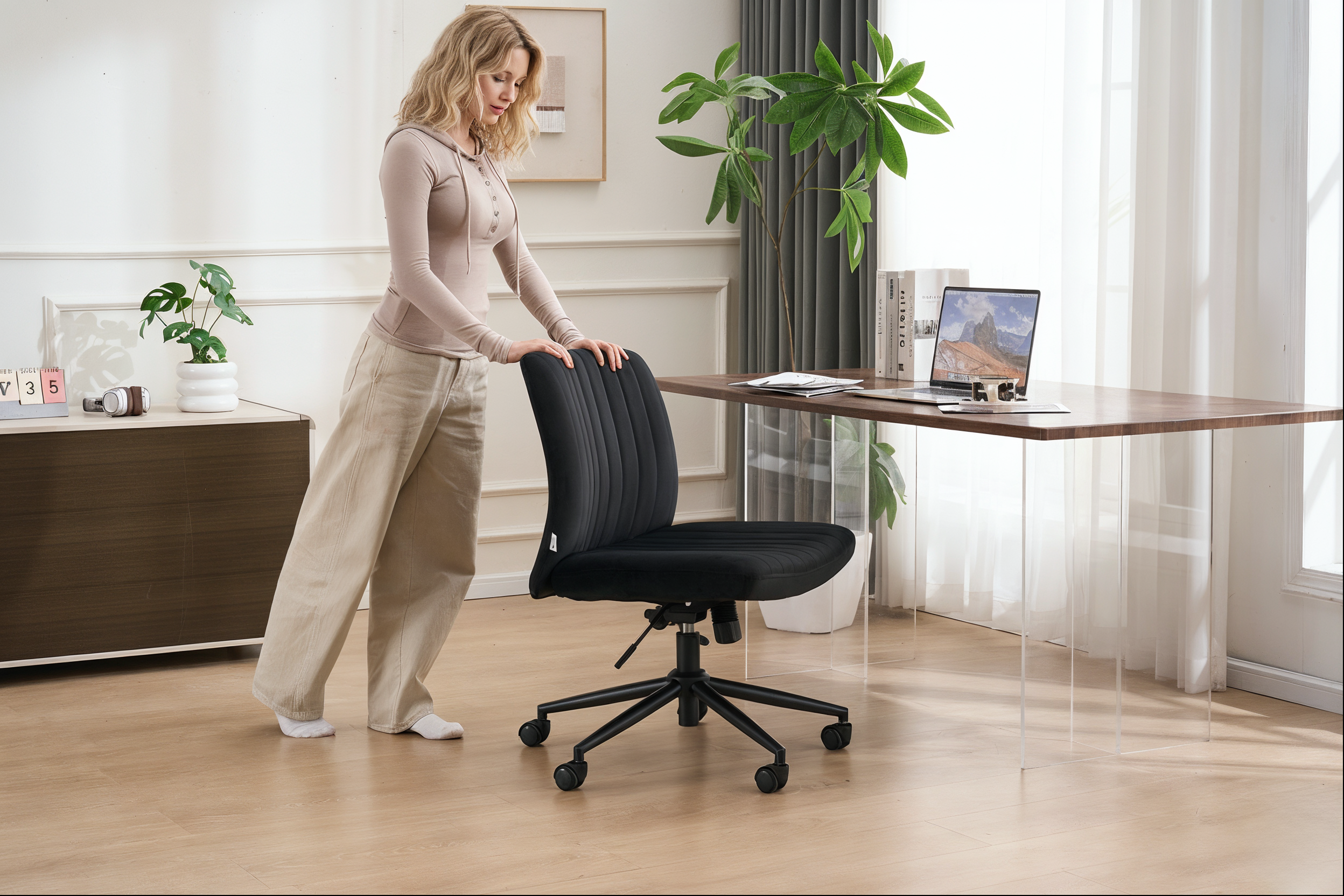
Ergonomic Workspace Setup with Adjustable Desk and Wide-Seat Chair
Download Our Complete Ergonomic Workspace Guide
Get our free 25-page Complete Ergonomic Workspace Guide with comprehensive assessment checklist and 12 illustrated desk exercises.
Workspace Integration
Space Planning
Chairs measuring 25+ inches wide and 24+ inches deep require adequate workspace clearance. Ensure minimum 30-inch width clearance for rotation and 28-inch depth clearance for rocking functions.
Desk Height Pairing
Wide-seat chairs with 16-20 inch height adjustment work with most desk configurations. Standard desk height (28-30 inches) pairs well with chairs adjustable to approximately 19-20 inches maximum height. Test all preferred sitting positions to ensure elbows maintain 90-110 degree angles at your desk.
Movement Reminders
Set gentle alerts every 20-30 minutes to cue position changes. Start with 2-3 variations and gradually expand your repertoire as flexibility improves. Position monitors to accommodate height variations across different postures.
Who Benefits Most
- Remote Workers – Extended home office hours benefit significantly from position variety. The ability to shift naturally throughout 6-8+ hour workdays reduces monotony and physical strain.
- Creative Professionals – Position changes can stimulate different thinking patterns. Gentle rocking motions may support creative flow states and problem-solving.
- Flexible Individuals – Those who naturally prefer varied sitting positions or have hip flexibility for cross-legged sitting find wide-seat designs particularly beneficial.
⚠️ Important Limitations
- Space Requirements – Chairs 25+ inches wide require more floor space than standard 19-inch designs. Measure your workspace before selecting.
- Precision Tasks – Work requiring extremely stable upper body positioning (detailed technical drawing, microsurgery practice) may benefit from traditional armrest support.
- Mobility Needs – Individuals requiring armrest support for standing/sitting transitions should consider adjustable-arm designs rather than armless configurations.
Complete Movement Strategy
Dynamic sitting should complement other healthy practices:
- Position changes: Every 20-30 minutes (utilize seat width)
- Standing breaks: Every 45-60 minutes (leave your desk)
- Brief walks: Every 90-120 minutes (circulation reset)
Listen to your body’s discomfort signals indicating when to shift. Move slowly between postures and track which positions feel most comfortable at different times of day.
Conclusion
Wide-seat ergonomic chairs enable natural movement throughout the workday rather than forcing one “correct” posture. Specific dimensions—particularly 24-26 inch seat widths combined with armless construction and curved back support—create platforms for varied sitting positions.
These design elements reduce static pressure, maintain circulation, and support long-term comfort by accommodating your body’s natural movement preferences. When selecting a chair, prioritize dimensions that match your body size and preferred sitting styles over brand names or aesthetic features.
The goal isn’t finding the perfect position—it’s enabling continuous movement as an integral part of your work routine.
Additional Resources from ErgoLife Foundation
Related Educational Content:
- Understanding Kneeling Chair Ergonomics: A Science-Based Guide
- Optimizing Your Workspace: Making the Transition to Alternative Seating
Join Our Community Newsletter
Get monthly ergonomic tips and research insights delivered to your inbox. Latest research, practical tips, success stories, and free resources.
About ErgoLife Foundation
ErgoLife Foundation is a nonprofit organization providing free, evidence-based ergonomic education to improve workplace health. Our mission is to make ergonomic knowledge accessible to everyone, supporting better posture, reduced pain, and improved well-being for all workers.