
Ready to find the right setup for you?
Explore our ergonomic products designed for how you actually sit.
In this guide
- How your office chair damages your posture over time
- Sign 1: Forward head posture (tech neck)
- Sign 2: Hip flexor tightness and glute inactivation
- Sign 3: Rounded shoulders and upper back weakness
- Sign 4: Chronic lower back pain after sitting
- Sign 5: Neck and shoulder tension with muscle knots
- The self-test: Is your chair the problem?
- When to adjust vs. when to replace your chair
- Better seating alternatives that fix these signs
- References
Key Takeaways
- Forward head posture, tight hip flexors, rounded shoulders, chronic lower back pain, and neck tension are the five warning signs your office chair is working against you.
- Each sign traces back to how your chair positions your pelvis – fix the pelvic tilt and most of these problems improve together.
- A simple 5-question self-test can tell you whether your chair is the root cause.
- The right ergonomic seating can reverse these patterns – but only if you catch them early enough.
Your office chair is the piece of furniture you spend more time in than your bed. For most desk workers, that means 6 to 10 hours per day sitting in the same position. And for most of those hours, your body is silently adapting to whatever shape your chair forces it into.
The problem is that these adaptations do not feel dramatic at first. They build slowly – a slight forward lean here, a tight hip there – until one day you realize your posture has fundamentally changed. Research from the Journal of Physical Therapy Science shows that prolonged static sitting alters muscle activation patterns within as little as four weeks.
This guide walks through the five most common warning signs, explains the biomechanics behind each one, and gives you a clear self-test to determine whether your chair is the root cause.
In This Article
- How your office chair damages your posture over time
- Sign 1: Forward head posture (tech neck)
- Sign 2: Hip flexor tightness and glute inactivation
- Sign 3: Rounded shoulders and upper back weakness
- Sign 4: Chronic lower back pain after sitting
- Sign 5: Neck and shoulder tension with muscle knots
- The self-test: Is your chair the problem?
- When to adjust vs. when to replace your chair
- Better seating alternatives that fix these signs
How your office chair damages your posture over time
Your chair shapes your posture through a process called adaptive shortening. When muscles stay in a shortened position for hours each day, they physically remodel. Connective tissue tightens. Opposing muscles weaken. Your body literally reshapes itself around the position your chair holds it in.
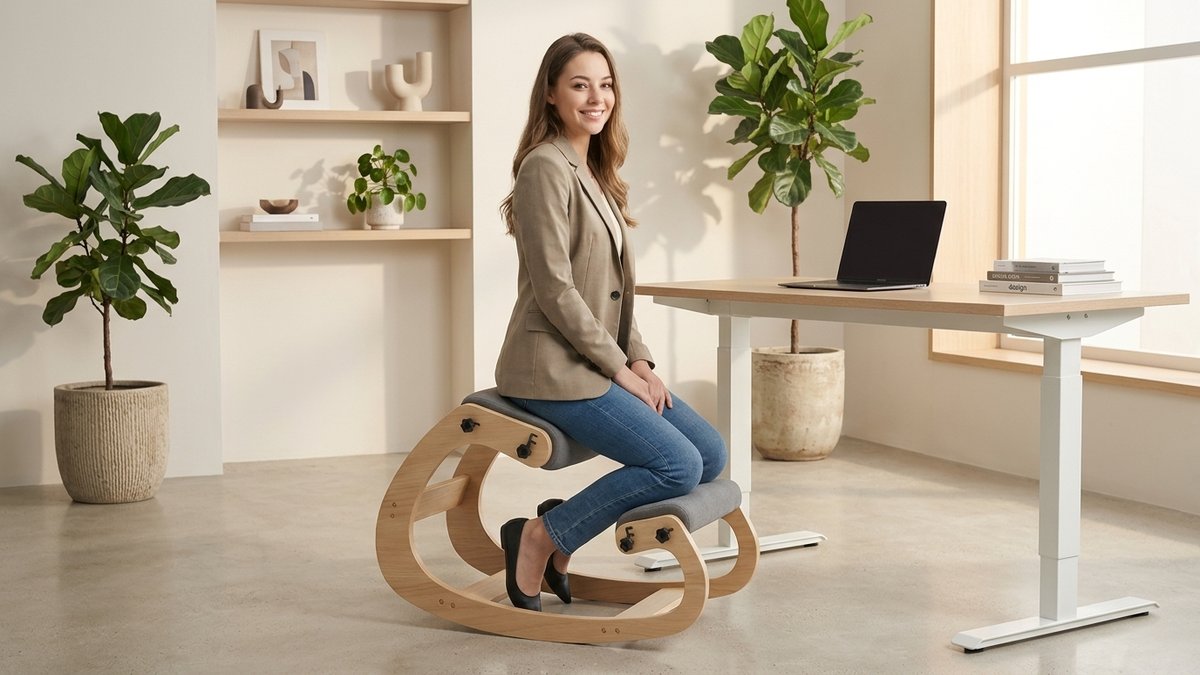
The cascade starts at your pelvis. Most office chairs tilt your pelvis backward – a position called posterior pelvic tilt. This flattens your natural lumbar curve, which forces your thoracic spine to compensate by rounding forward. Your shoulders follow. Then your head pushes forward to keep your eyes on the screen.
Each of the five signs below traces back to this same root cause. Understanding the chain reaction helps you see that these are not five separate problems – they are five symptoms of one problem: your pelvis is in the wrong position for 8 hours a day.
Sign 1: Forward head posture (tech neck)
Every inch your head moves forward adds roughly 10 pounds of effective weight to your neck muscles. Most desk workers carry their head 2 to 3 inches forward, which means the neck is supporting 20 to 30 extra pounds all day long.
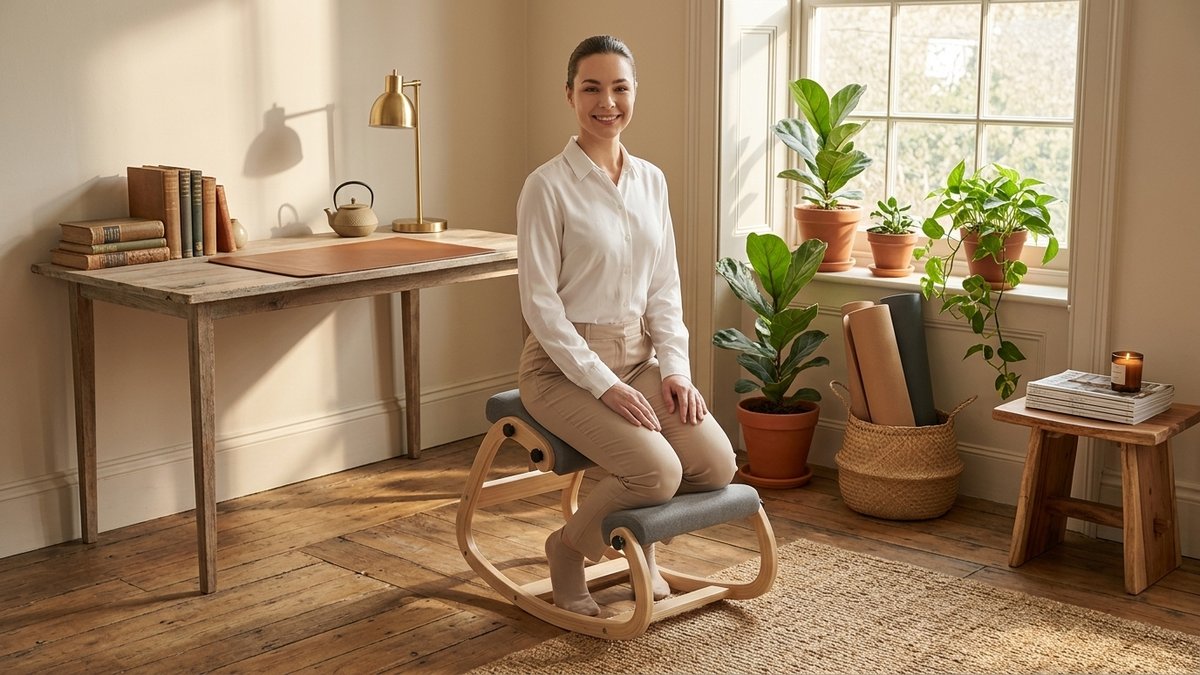
Tech neck develops because a standard office chair rounds your upper back. When your thoracic spine curves forward, your head must push further forward to keep your gaze level with your monitor. It is a compensation, not a choice.
The symptoms build gradually. First come tension headaches at the base of the skull. Then stiffness in the cervical spine. Over months, the suboccipital muscles shorten permanently, and neck pain from desk work becomes a daily companion.
A 2024 study in the Journal of Occupational Health found that workers who sat in chairs without lumbar support developed measurable forward head posture within 6 months. Those with proper pelvic positioning maintained neutral head alignment.
Sign 2: Hip flexor tightness and glute inactivation
Sitting at a 90-degree hip angle for 8 hours shortens your hip flexors and effectively turns off your glutes. Physical therapists call the glute problem “gluteal amnesia” or “dead butt syndrome” – and it is far more common than most people realize.
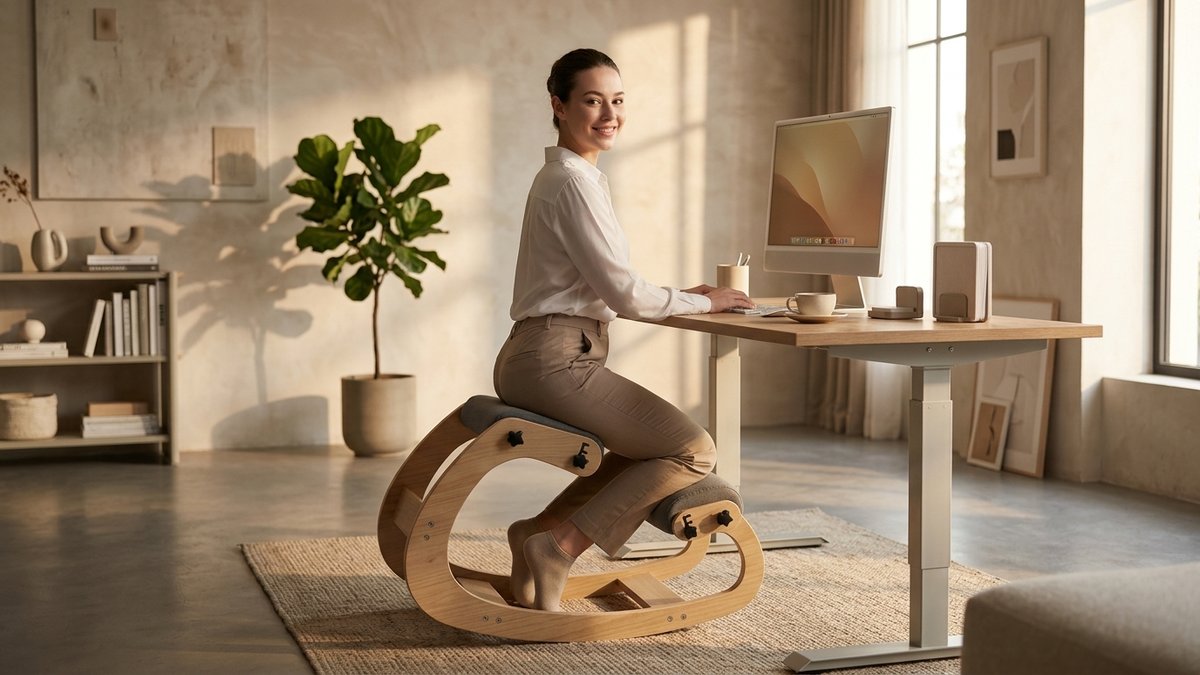
Your hip flexors (primarily the psoas and iliacus) connect your lumbar spine to your thigh bone. When they tighten, they pull your pelvis into an anterior tilt during standing and walking. This creates excessive lumbar lordosis – an exaggerated lower back curve that compresses the spinal discs.
Meanwhile, your glutes – the largest muscles in your body – stop firing properly. They lose both strength and neurological activation. The result is that your lower back takes over stabilization work your glutes should handle, which is a primary driver of the science of why sitting causes pain.
Sign 3: Rounded shoulders and upper back weakness
Rounded shoulders happen when your chest muscles shorten and your upper back muscles weaken. This imbalance pulls your shoulder blades apart and rotates your arms inward – a posture that physical therapists call upper crossed syndrome.
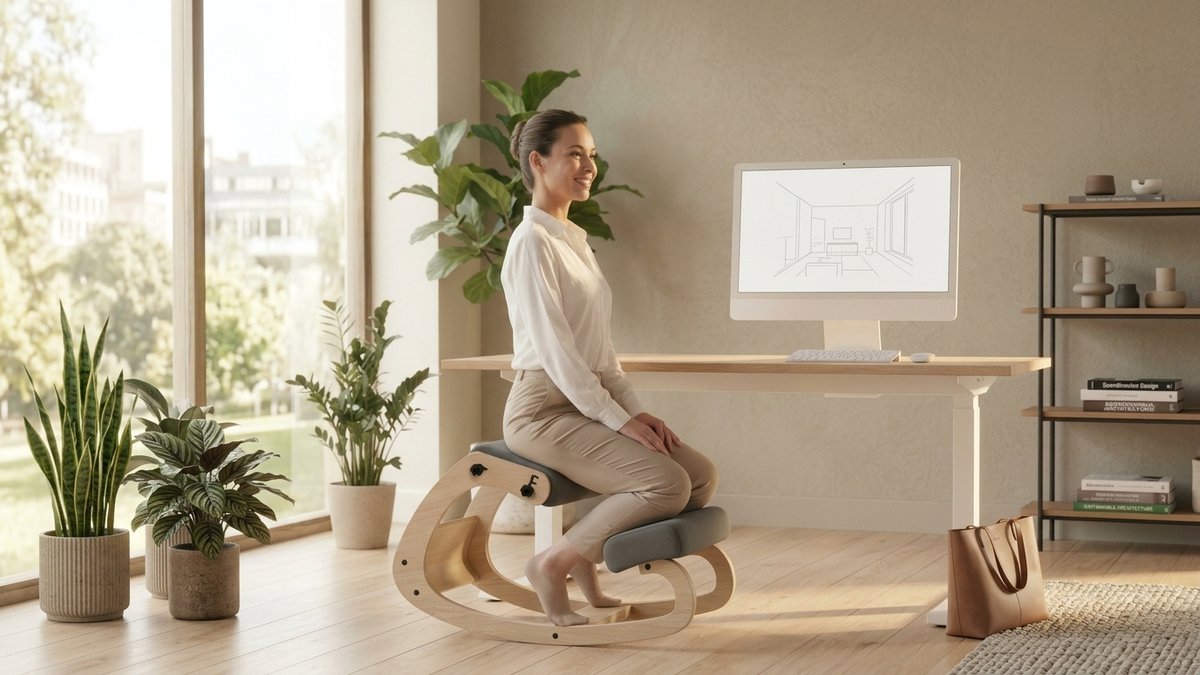
Standard office chairs with poor back support allow your thoracic spine to flex forward. Your pectoral muscles adapt to this shortened position. At the same time, your rhomboids and middle trapezius muscles stretch and weaken from being held in a lengthened position all day.
The downstream effects are significant. Rounded shoulders compress the rotator cuff, increasing injury risk. They reduce lung capacity by up to 30% according to research in the Archives of Physical Medicine. And they create a visual posture that projects low confidence and fatigue – which research from Ohio State University links to actually feeling those emotions.
If you work at a keyboard, this sign may also connect to wrist and forearm pain. Internally rotated shoulders change the angle of your forearms, which means your wrists compensate during typing. Learning how to fix your posture starts with understanding these connections.
Sign 4: Chronic lower back pain after sitting
Traditional sitting increases lumbar disc pressure by up to 40% compared to standing. When your chair tilts your pelvis backward, your lumbar spine loses its natural curve. The discs between your vertebrae shift from even pressure distribution to concentrated loading on the posterior side.
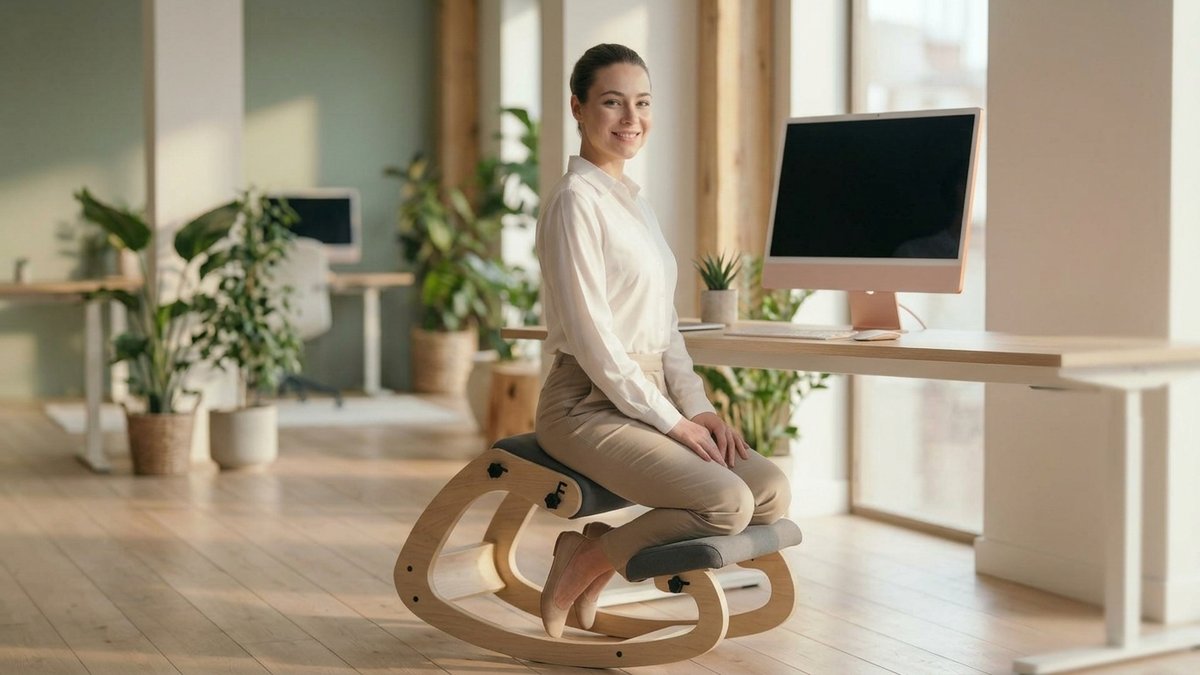
The pain pattern is distinctive. It typically starts as a dull ache after 2 to 3 hours of sitting. It improves when you stand or walk. And it gets worse over weeks and months as the disc tissue gradually loses hydration from constant compression.
This is not just discomfort – it is structural damage that progresses. The British Journal of Sports Medicine found that workers who reported lower back pain from sitting had measurably thinner lumbar discs compared to those who alternated positions throughout the day. Combining chair improvements with exercises for lower back pain gives the best results.
Sign 5: Neck and shoulder tension with muscle knots
Chronic muscle knots in the upper trapezius and levator scapulae are almost universal among desk workers with poor chairs. These trigger points develop because the muscles are overworking to hold your head and shoulders in a compensated position.
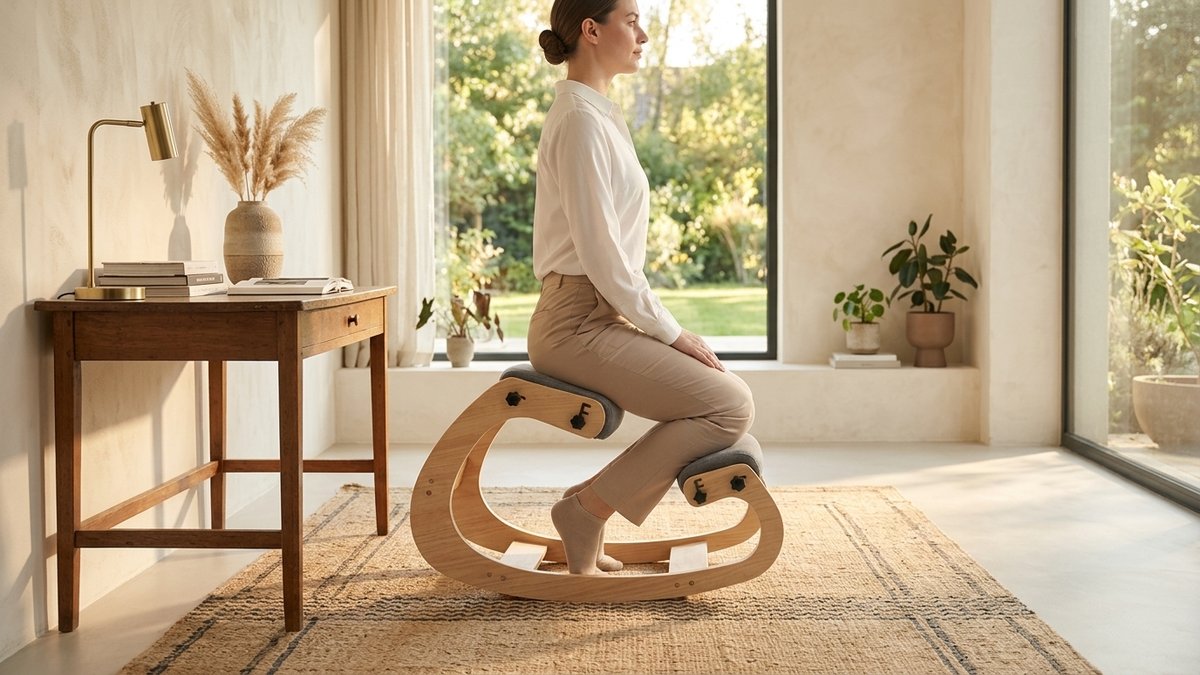
When your chair allows your upper body to slump forward, the muscles at the back of your neck and top of your shoulders must constantly contract to keep your head upright. They never get to relax. Over time, sustained contraction creates trigger points – tight knots of muscle fiber that refer pain to your head, jaw, and down your arms.
A study in the Journal of Electromyography and Kinesiology found that trapezius muscle activity is 23% higher in workers using chairs without adequate lumbar support. The neck compensates for what the lower spine cannot do.
If you recognized yourself in three or more of these signs, your chair is actively working against you. Our Chair Finder Quiz can help you identify what type of seating would reverse these patterns.
The self-test: Is your chair the problem?
Answer these five questions to determine whether your chair is driving your posture problems. Be honest – the goal is clarity, not blame.
- Do your symptoms improve on weekends or vacations? If pain and tension decrease when you are not at your desk, your chair and workstation are primary factors.
- Do you catch yourself slouching within 30 minutes of sitting down? If you cannot maintain upright posture without constant effort, your chair is not supporting neutral alignment.
- Is your chair cushion flat or compressed? A worn-out cushion shifts your pelvis backward and eliminates whatever support the chair originally provided.
- Can you sit with your feet flat and your thighs parallel to the floor? If not, your chair height is wrong for your body, and every downstream posture problem follows.
- Does your chair have functional lumbar support that contacts your lower back? Not just “lumbar support” in the product description – actual contact with your lumbar curve right now.
When to adjust vs. when to replace your chair
Not every chair problem requires a new purchase. Some posture issues can be fixed with simple adjustments. Others cannot.
Adjust your current chair if:
- Your chair has height adjustment but you have never set it to your body measurements
- Lumbar support exists but is positioned too high or too low
- Armrests are adjustable but currently set at the wrong height
- You have not tried adding a seat wedge cushion to create a slight forward tilt
Replace your chair if:
- The seat cushion is compressed flat and no longer supports your weight evenly
- There is no lumbar support and no way to add effective support
- The chair forces a 90-degree or more hip angle with no tilt mechanism
- You have made adjustments and symptoms persist after 2 weeks
- The chair is more than 7 years old – foam degradation is significant by this point
Learning what to look for in an ergonomic chair helps you avoid making the same mistake twice. The most important feature is not padding or recline – it is whether the seat encourages a neutral pelvic position.
Address all five signs with one change
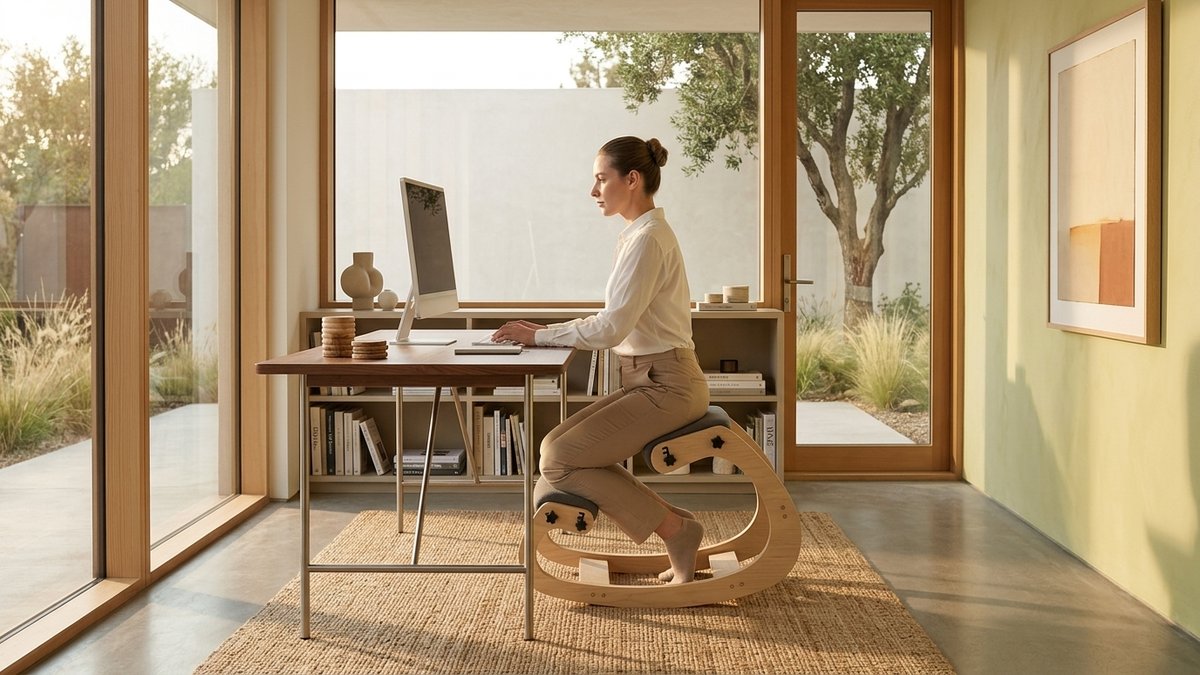
The NYPOT Kneeling Chair’s forward tilt opens hip flexors (Sign 2), activates core muscles that fight slouching (Signs 1, 3), reduces lumbar compression (Sign 4), and repositions your head over your spine (Sign 5).
Better seating alternatives that fix these signs
The most effective alternative addresses all five signs at the source – your pelvic position. Rather than adding support to fight gravity, the best ergonomic chairs use geometry to work with your body.
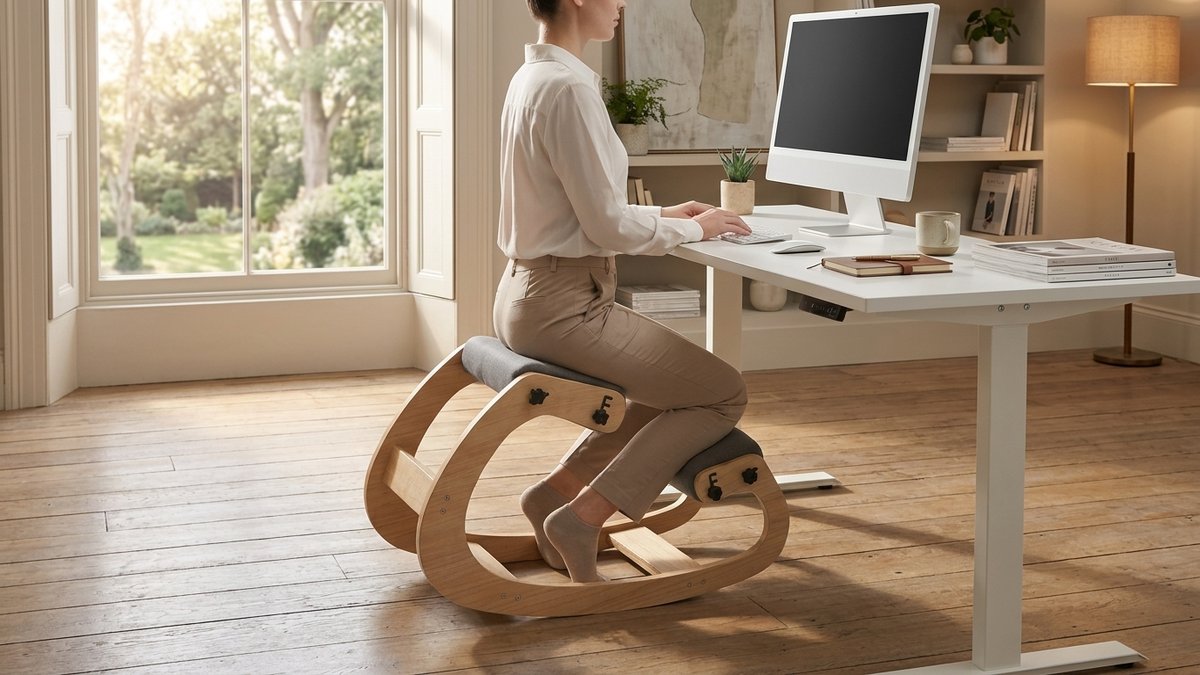
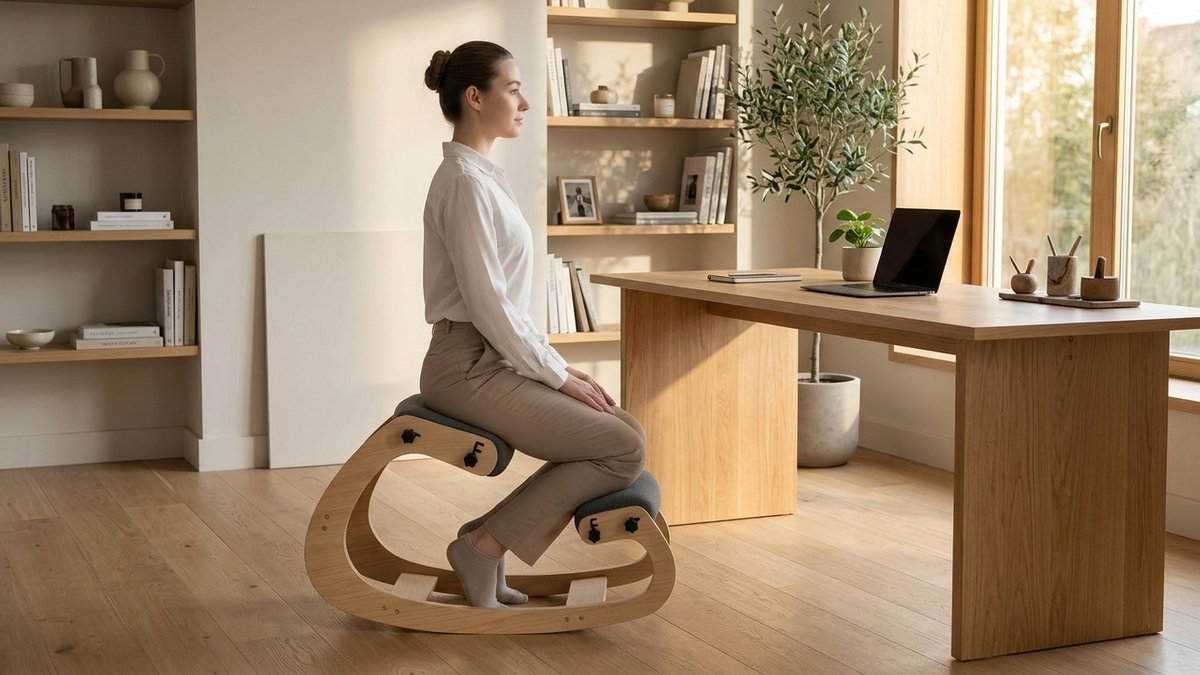
Kneeling chairs tilt the seat forward by 20 to 30 degrees. This rotates your pelvis into a neutral or slightly anterior tilt, which restores your lumbar curve automatically. When the lumbar curve returns, the thoracic spine straightens, the shoulders pull back, and the head centers over the spine. One change at the base corrects the entire chain.
For people who prefer position variety, wide-seat active sitting chairs allow cross-legged, tucked, and asymmetric positions while still maintaining better pelvic alignment than a standard office chair. The key is movement variability – no single position is perfect, but some chairs make it easy to shift while others lock you in.
Whether you choose a kneeling chair, an active sitting stool, or a reconfigured traditional chair, the measure of success is simple: do your five signs improve within 2 to 4 weeks of consistent use? If not, the chair is not the right fit for your body. Exploring kneeling chair advantages and limitations can help you decide.
Your posture recovery starts now
Whether you recognized one sign or all five, the fix starts with understanding what your body actually needs. The longer these patterns continue, the harder they are to reverse. But research shows that postural adaptations from poor seating are reversible – if you intervene before they become structural.
Start with the self-test above. Then commit to one change this week – whether that is adjusting your current chair, adding a seat wedge, or exploring a fundamentally different approach to sitting. Your spine has been adapting to your chair for years. Give it something better to adapt to.
How many signs did you check off?
Whether it is one sign or all five, the fix starts with understanding what your body actually needs. Our Chair Finder Quiz factors in your specific symptoms and work habits.
References
- Nachemson, A. (1976). The lumbar spine: An orthopedic challenge. Spine, 1(1), 59-71.
- Pynt, J., Higgs, J., & Mackey, M. (2001). Seeking the optimal posture of the seated lumbar spine. Physiotherapy Theory and Practice, 17(1), 5-21.
- Hansraj, K. K. (2014). Assessment of stresses in the cervical spine caused by posture and position of the head. Surgical Technology International, 25, 277-279.
- Cho, J., Lee, E., & Lee, S. (2019). Upper thoracic spine mobilization and mobility exercise versus upper cervical spine mobilization and stabilization exercise in individuals with forward head posture. BMC Musculoskeletal Disorders, 20, 525.
- Van Dieen, J. H., de Looze, M. P., & Hermans, V. (2001). Effects of dynamic office chairs on trunk kinematics, trunk extensor EMG and spinal shrinkage. Ergonomics, 44(7), 739-750.
- British Journal of Sports Medicine (2015). Sedentary time and its association with risk for disease incidence, mortality, and hospitalization in adults. BJSM, 49(11), 737-738.