Key Takeaways
- Tilting your head forward just 15 degrees raises cervical spine load from 12 to 27 pounds (Hansraj 2014).
- A 12-week posture correction program cut neck pain by 48% and improved forward head position by 2.4 cm in office workers (Cramer et al. 2018).
- Daily posture exercises for eight weeks reduced upper back pain by 32% (Kim et al. 2015).
- The best posture is one that moves – no single position is healthy if held for hours.
Table of Contents
Research shows that 80 percent of office workers will deal with posture-related pain at some point in their careers. Neck stiffness, lower back aches, headaches, shallow breathing, and chronic fatigue all trace back to how people hold their bodies for hours each day.
It does not have to be that way.
Posture is not set in stone. No matter your age or how long your habits have lasted, you can improve with the right steps and steady effort. This guide covers what good posture looks like, how to spot problems, and the exercises that help you stand and sit taller every day.
Understanding Good Posture
Good posture does not mean standing stiff like a soldier. It means keeping the natural curves of your spine so your muscles, joints, and ligaments can work well without extra strain. Your spine has three curves: a slight forward curve at the neck, a backward curve at the upper back, and a forward curve at the lower back. Good posture keeps all three in a balanced, neutral position.
When your posture is right, a straight line would pass through your earlobe, the tip of your shoulder, the middle of your hip, just behind your kneecap, and slightly in front of your ankle. Your weight sits evenly on both feet, your shoulders are relaxed but not slumped, and your head rests right above your neck rather than poking forward.
A big myth about posture is that there is one perfect position you should hold all day. In truth, the best posture is one that moves. Your body is made to move, and no single position is healthy if held for hours. The goal is to come back to neutral often and move throughout the day rather than locking into any one pose.
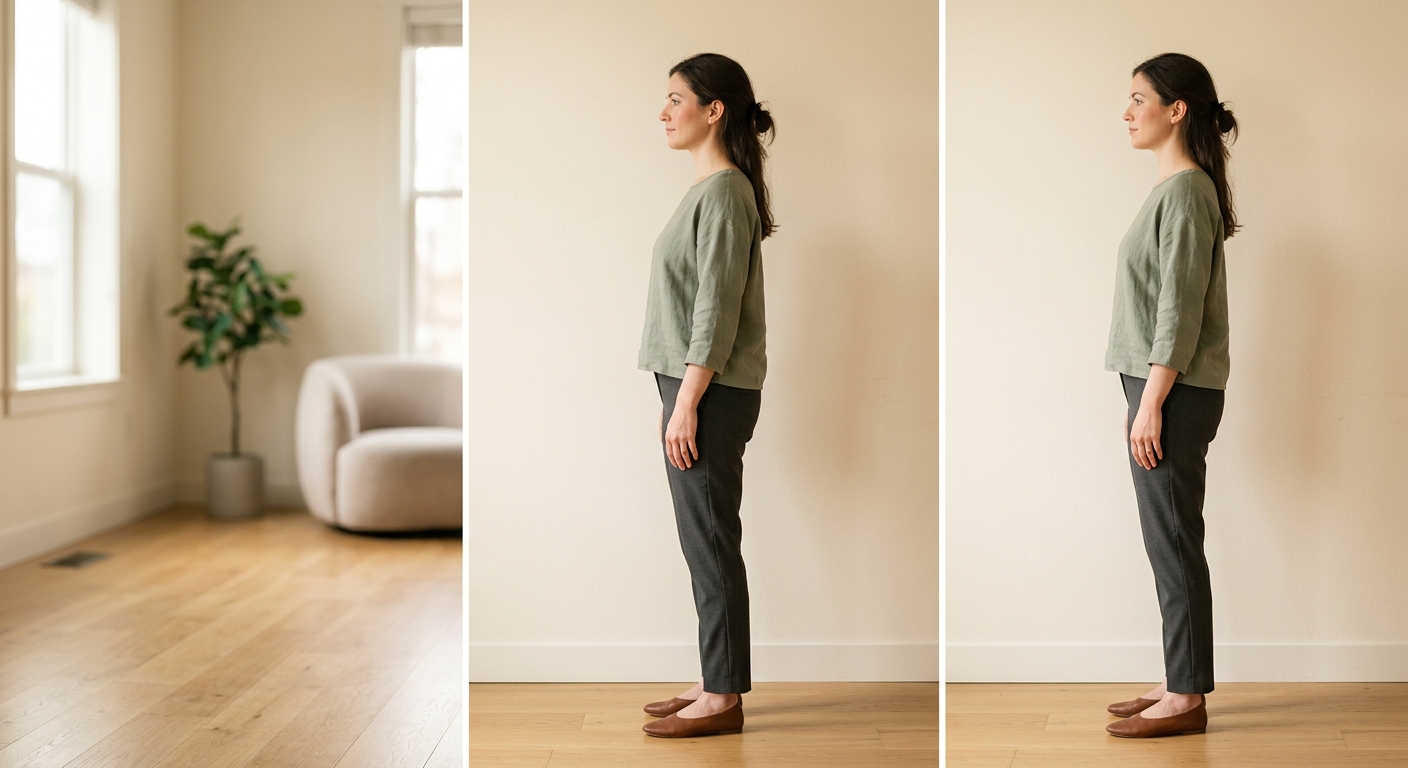
Five alignment checkpoints that define neutral posture.
Research backs up the link between posture and pain:
- Hansraj (2014) found that tilting the head forward by just 15 degrees raises the load on the cervical spine from 12 pounds to 27 pounds. At 60 degrees, it reaches 60 pounds.
- Cramer et al. (2018) demonstrated that a 12-week posture correction program cut neck pain by 48 percent and improved forward head position by an average of 2.4 centimeters in office workers.
- Kim et al. (2015) showed that participants who did daily posture exercises for eight weeks saw a 32 percent reduction in upper back pain.
Signs Your Posture Needs Attention
Many people have posture problems they do not even know about. Here are the most common signs:
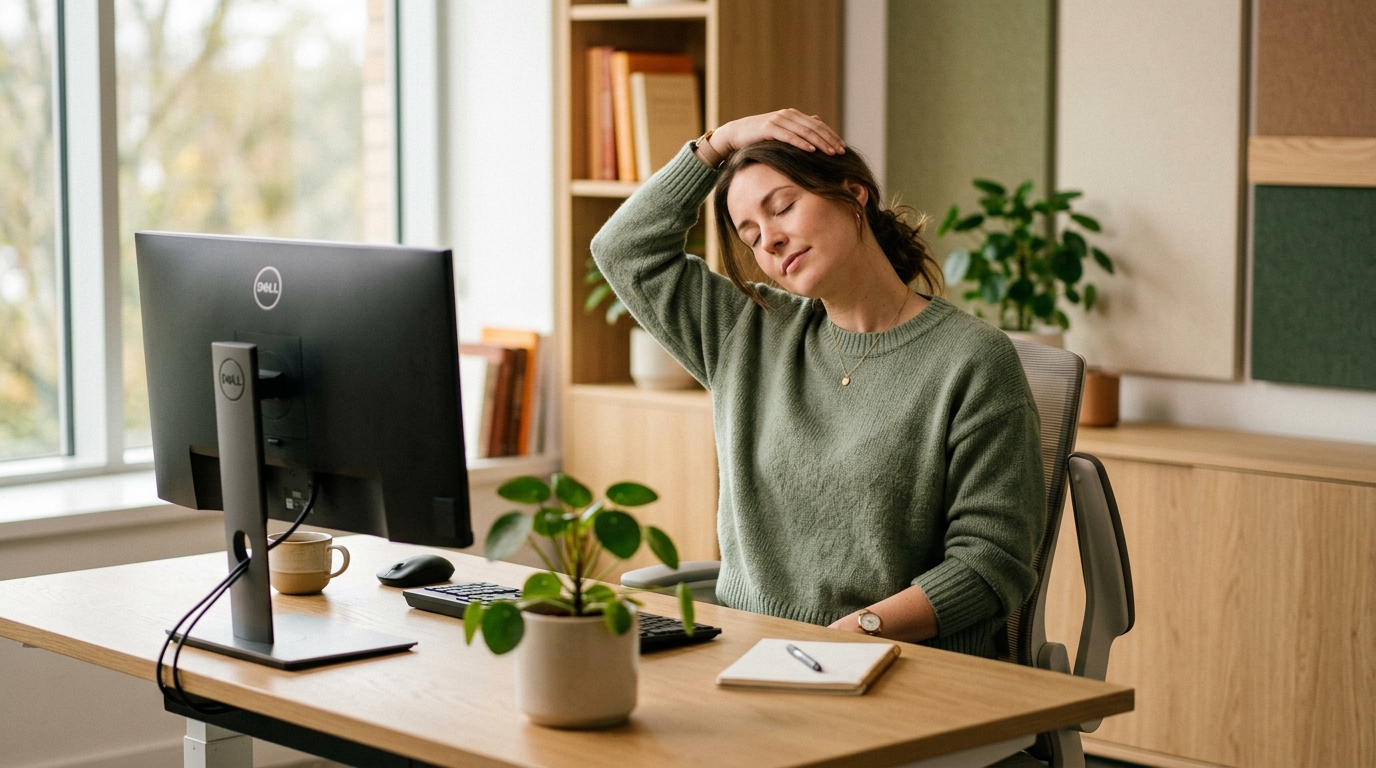
- Forward head: Your ears sit in front of your shoulders instead of above them. This is very common in people who look at screens for hours. It can add up to 30 extra pounds of force on your neck.
- Rounded shoulders: Your shoulders curve inward and forward, causing your chest to cave in. This shortens the muscles in front and weakens those in your upper back.
- Upper back hunch: Too much rounding of the upper back, sometimes called a “dowager’s hump” in its more severe form.
- Tilted pelvis: Your pelvis tips forward, making your lower back arch too much and your belly push out. This is common in people who sit for long stretches.
- Uneven shoulders or hips: One side sits higher than the other, pointing to a side-to-side imbalance that can cause one-sided pain.
- Ongoing tension or pain: Regular headaches, neck stiffness, upper back tightness, or lower back aches that get worse as the day goes on are often tied to posture.
If you spot several of these signs in yourself, you are not alone. Studies show that most office workers have at least two of these issues. The good news is that each one can be fixed with the right effort.
Maintain your spine’s natural alignment while you work. Rocking base, memory foam knee pads, adjustable height.
Find which chair fits your posture needs
How to Improve Your Posture
Fixing your posture means working on three areas: how you stand, how you sit, and how you sleep. Each position has its own alignment tips.
Standing Posture
When standing, spread your weight evenly on both feet, about hip-width apart. Do not lock your knees; keep them slightly bent. Tighten your core gently, as if bracing for a light push, but do not suck in your stomach. Roll your shoulders up, back, and down so they rest in a relaxed but open spot. Pull your chin slightly back so your ears are right above your shoulders. Picture a string on top of your head pulling you upward.
If you stand for long stretches, shift your weight now and then. Place one foot on a low stool. Take short walks every 30 minutes. Standing still for hours is no better than sitting still.
Sitting Posture
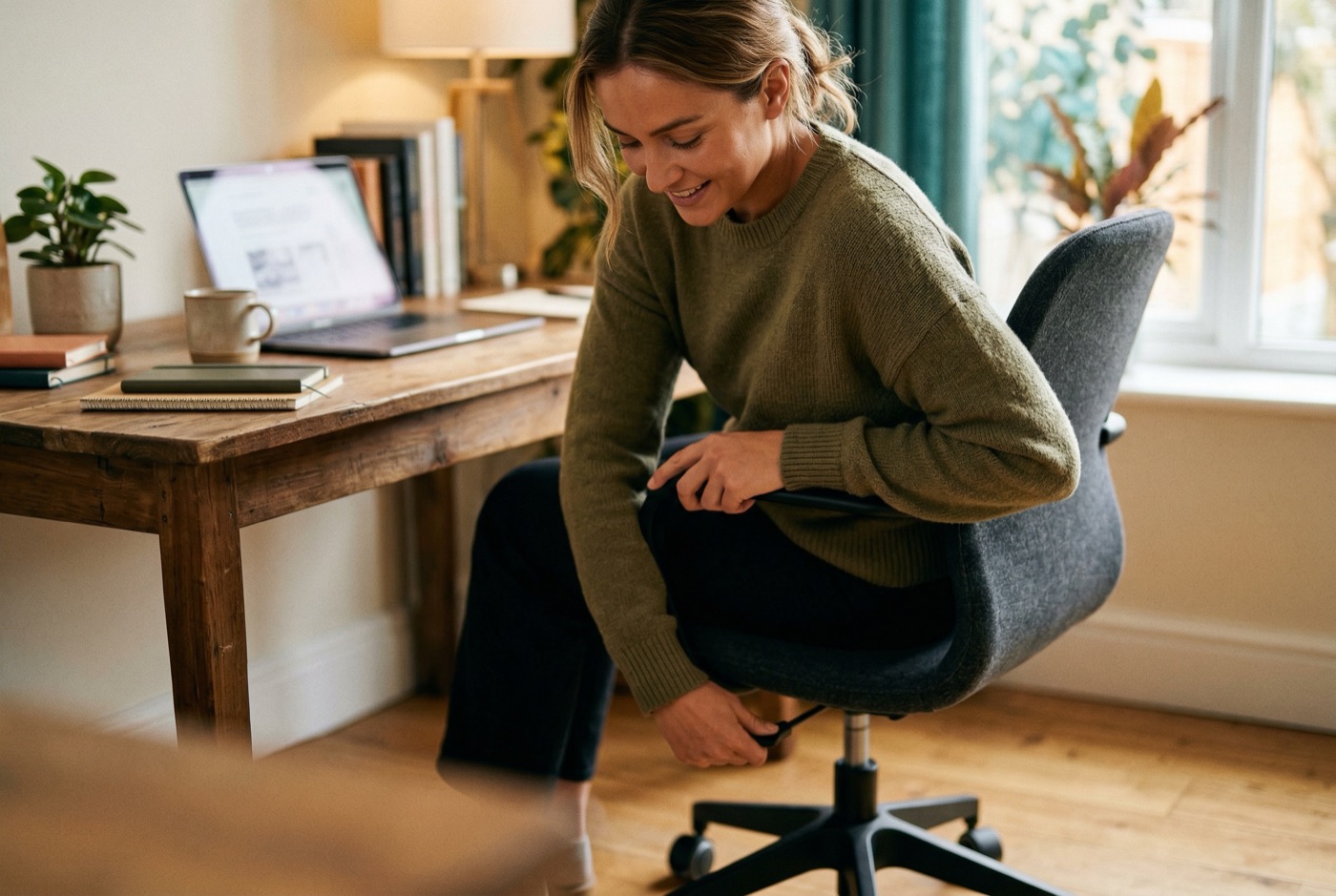
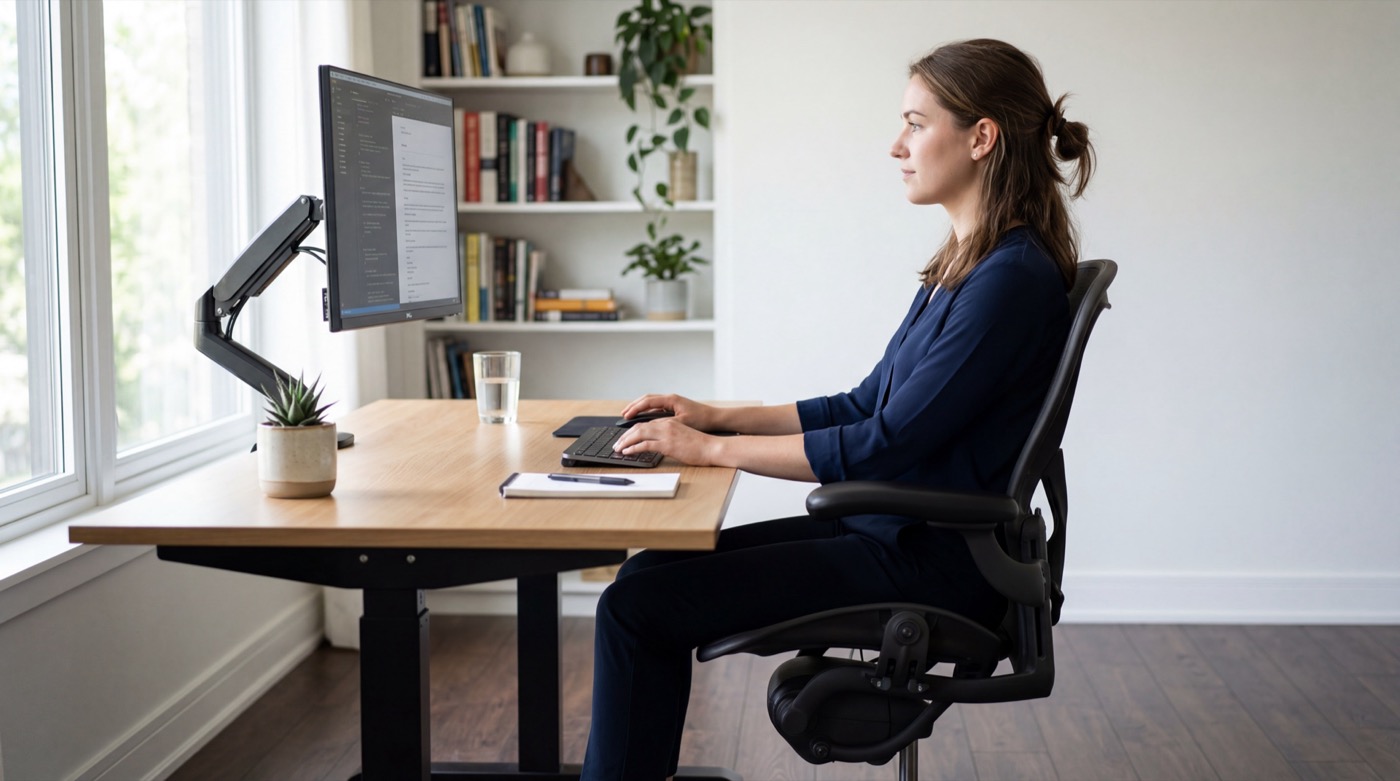
Sitting is where most posture problems start because it puts more stress on your spine than standing. When seated, keep your feet flat on the floor with knees at about a 90-degree angle. Your hips should be slightly higher than your knees, or at least level. Sit back in your chair so the backrest holds your lower back curve. If your chair has no lumbar support, place a small rolled towel or cushion behind your lower back.
Keep your shoulders relaxed and your elbows close to your body at about 90 degrees when typing. Your screen should be at eye level or just below, about an arm’s length away. For more on desk setup, see our Desk Ergonomics Guide.
Choosing the Right Chair
The reason most people cannot maintain a neutral pelvic tilt in a standard chair is physics, not willpower. A flat seat and 90-degree hip angle naturally pull your pelvis backward. A kneeling chair like the NYPOT kneeling chair tilts the seat forward 20-30 degrees, positioning your pelvis in the neutral alignment this section describes – without requiring constant conscious effort.
Good posture should not require constant effort – if you have to remind yourself to sit up straight, the problem is your chair, not your discipline.
The most important sitting rule is also the simplest: do not sit for more than 30 to 45 minutes without standing, stretching, or walking for a minute or two. Movement breaks are the best fix for sitting-related pain.
Sleeping Posture
You spend about a third of your life asleep, so how you sleep matters. The best positions for your spine are on your back or on your side. If you sleep on your back, use a pillow that holds your neck’s natural curve without pushing your head too far forward. A small pillow under your knees can ease lower back strain. If you sleep on your side, keep your spine straight with a pillow thick enough to fill the gap between your ear and the mattress. Put a pillow between your knees to keep your hips lined up.
Sleeping on your stomach is the worst position for posture. It forces your neck to twist and flattens your lower back curve. If you are a stomach sleeper, switching to your side is one of the best changes you can make.
Exercises for Better Posture
These five exercises strengthen the muscles that support good posture and stretch the ones that pull you out of line. Each takes just a few minutes.
1. Chin Tucks
Sit or stand tall. Without tilting your head, gently pull your chin straight back as if making a double chin. Hold for five seconds, then let go. Repeat 10 times. This builds the deep neck muscles that fight forward head posture.
2. Wall Angels
Stand with your back, head, and hips against a wall. Place your arms on the wall in a “goal post” shape with elbows at 90 degrees. Slowly slide your arms up and down the wall like making a snow angel. Keep your arms, head, and back touching the wall the whole time. Do 10 reps. This opens the chest and builds the upper back.
3. Thoracic Extension
Sit in a chair with a firm back. Place your hands behind your head and gently arch your upper back over the top of the chair. Hold for five seconds, come back, and repeat eight times. This loosens the upper back and helps undo the rounding from desk work.
Additional Stretches to Try
4. Cat-Cow Stretch
Start on your hands and knees with a flat back. Breathe in as you drop your belly toward the floor and lift your head (cow). Breathe out as you round your spine toward the ceiling and tuck your chin (cat). Go back and forth slowly for one to two minutes. This loosens the whole spine and builds body awareness. For more moves that help back pain, see our 10 Exercises for Lower Back Pain Relief.
5. Glute Bridges
Lie on your back with knees bent and feet flat on the floor. Press through your heels and squeeze your glutes to lift your hips until your body forms a straight line from shoulders to knees. Hold for five seconds, lower slowly, and repeat 12 times. Strong glutes are key for pelvic stability and lower back support.
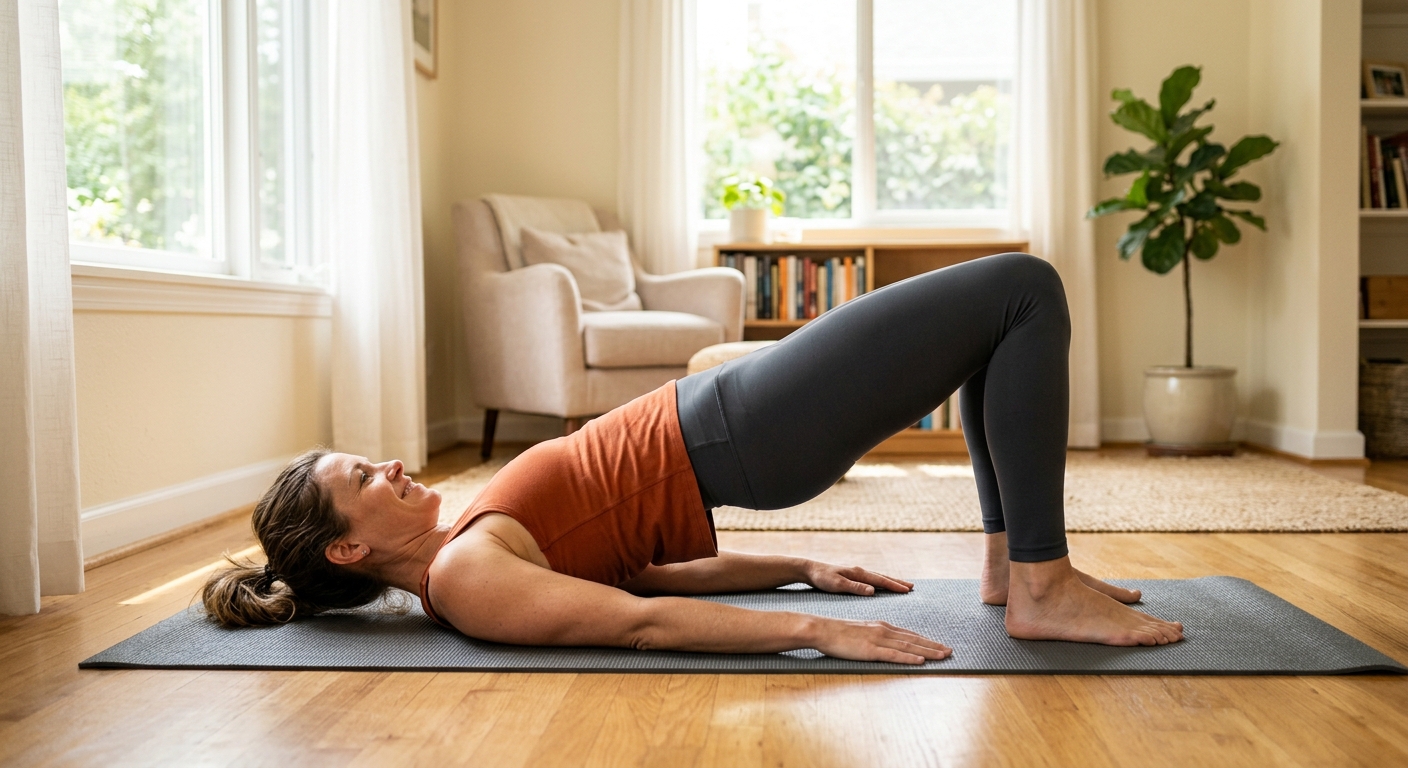
Daily posture exercises build the muscles that keep you aligned.
Building a Posture Habit
Knowing the right moves is only half the battle. The real challenge is making good posture a habit. Here is how:
Set reminders. Use your phone or computer to set an alarm every 30 to 45 minutes during work. When it goes off, do a quick check: are your shoulders relaxed? Is your head over your shoulders? Are you sitting back in your chair? This takes three seconds and slowly retrains your default position.
Link it to things you already do. Every time you take a sip of water, check your posture. Every time you answer the phone, pull your shoulders back. Pairing a new habit with an old one is one of the best ways to make it stick.
Start with one thing. Trying to fix everything at once is too much. Pick the one issue that bugs you most and focus on it for two to three weeks before adding another.
Exercises for Better Results
Exercise regularly. Doing the moves above three to five times per week will build the muscle base that makes good posture feel natural. When your muscles are strong enough to hold proper form, you will not have to think about it as much.
The most effective posture habit is one that does not require remembering. A chair that structurally positions your spine correctly removes “sit up straight” from your mental to-do list. This is why kneeling chairs and cross-legged chairs like the NYPOT criss-cross chair are gaining traction – they make good posture the default position rather than a conscious choice.
Be patient. Posture habits build over years and will not change overnight. Most people see real progress within four to six weeks of steady work. The key is daily practice, not perfection.
Maintain your spine’s natural alignment while you work. Rocking base, memory foam knee pads, adjustable height.
Find Your Perfect Chair
Answer 5 quick questions about your work style, body type, and pain points. Our Chair Finder Quiz matches you with the ergonomic seating solution that fits your needs.
Take the Chair Finder Quiz
Take the Next Step
Your best posture is your next posture. No single position, no matter how correct, should be held all day. The goal is not perfection but awareness: catching yourself when you drift and coming back to neutral, over and over, until it becomes second nature.
What is the one posture habit you will start with today? Whether it is a chin tuck at your desk, a wall angel before bed, or simply setting a 30-minute reminder to move, one small change done daily beats a perfect plan that never starts.
If you want to put the principles in this guide into daily practice, an ergonomic seating solution can make proper alignment feel effortless rather than forced. Pair the right chair with the exercises above, and you have a complete system for lasting posture improvement.
Questions about posture or ergonomic seating? Contact our team at
info@ergolifefoundation.org
Ready to find the right setup for you?
Explore our ergonomic products designed for how you actually sit.
Related Reading
- Exercises For Lower Back Pain
- Active Sitting
- Kneeling Chair Ergonomics
- Kneeling Chair Pros And Cons
- Choosing An Ergonomic Chair
Disclosure: ErgoLife Foundation may earn a commission from products linked in this article. All proceeds support our free ergonomic education programs. Our recommendations are based on independent research and are not influenced by affiliate relationships.