In this guide
Key Takeaways
- Active sitting means using seating that encourages continuous micro-movements, keeping muscles engaged while you work.
- Research shows active sitting increases trunk muscle activation by 33% and reduces spinal loading by 25% compared to standard chairs.
- A 2026 University of Queensland study links active sitting to measurable cognitive health improvements.
- Five types of active sitting chairs exist – each suits different work styles and body types.
- The transition takes 2 to 4 weeks of gradual adaptation to build comfort and endurance.
If you have ever noticed that sitting perfectly still for 8 hours feels fundamentally wrong, your instincts are correct. The human body was not designed for static postures. It was designed to move – even while sitting.
Active sitting is the practice of using seating that encourages continuous micro-movements, keeping your muscles engaged while you work. It is not about fidgeting. It is about creating a seated environment where small, natural movements happen automatically throughout your day.
This guide explains what the research says, which types of active sitting chairs exist, and how to make the transition from passive to active sitting without sacrificing productivity or comfort.
In This Article
What is active sitting?
Active sitting is any seated position where your body must continuously make small postural adjustments to maintain balance. Unlike a traditional office chair that supports your body in a fixed position, active sitting chairs create mild instability that engages your core, back, and hip muscles.
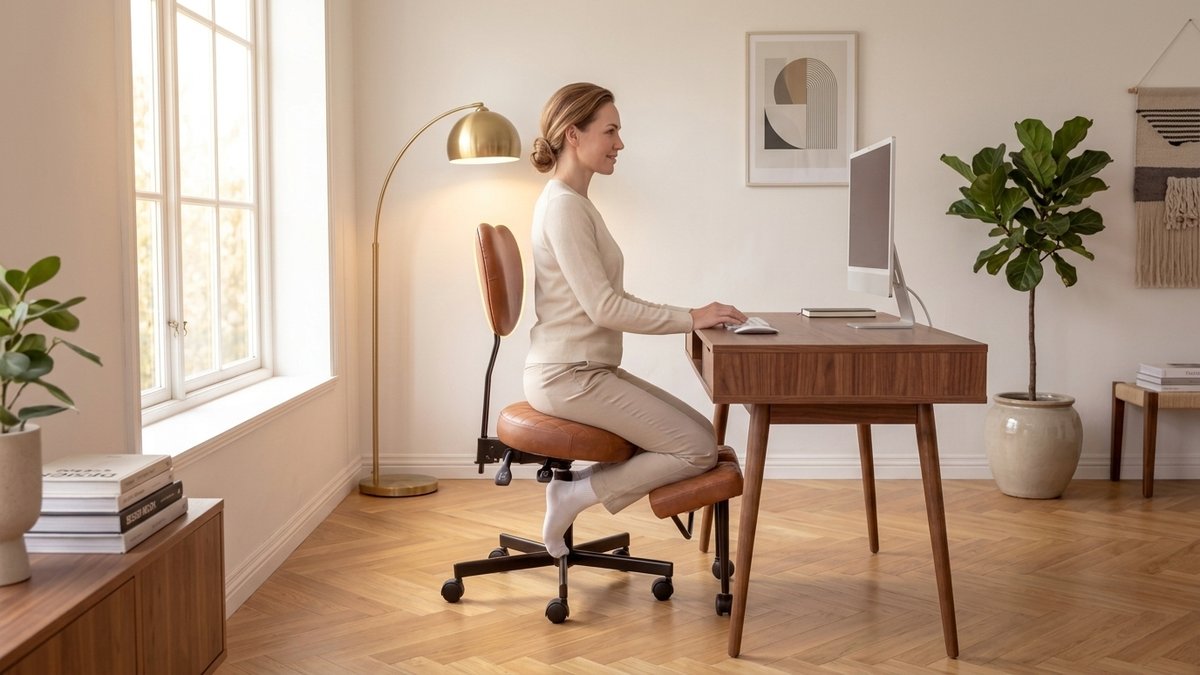
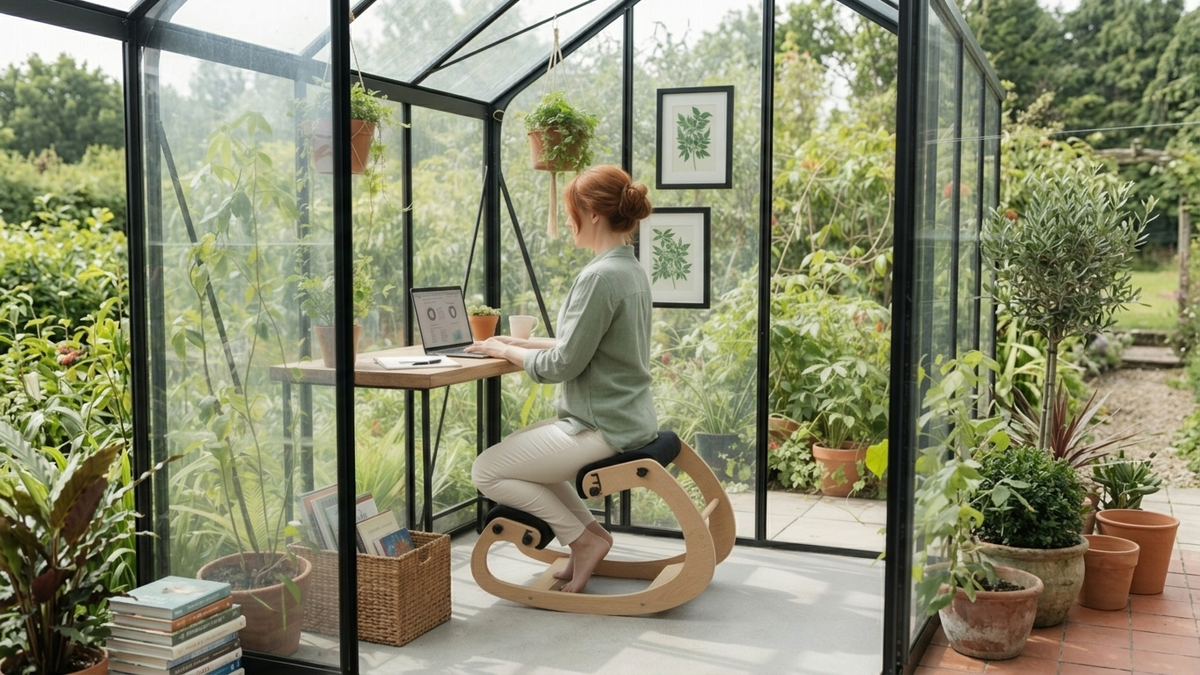
Think of the difference between sitting on a park bench and sitting on a log. The bench holds you in place. The log requires constant micro-adjustments. Active sitting chairs recreate that log-sitting dynamic with enough design refinement to make it comfortable for 6 to 8 hours.
The core principle is that movement variability matters more than finding one perfect posture. Research in Ergonomics consistently shows that posture variation – not posture perfection – is what protects the spine during prolonged sitting. This connects to the broader concept of kneeling chairs and active sitting that our foundation studies.
The science behind moving while you sit
Peer-reviewed research shows three measurable benefits of active sitting: increased muscle activation, reduced spinal loading, and improved circulation. These are not theoretical claims – they come from studies using EMG sensors, intradiscal pressure measurements, and metabolic monitoring.
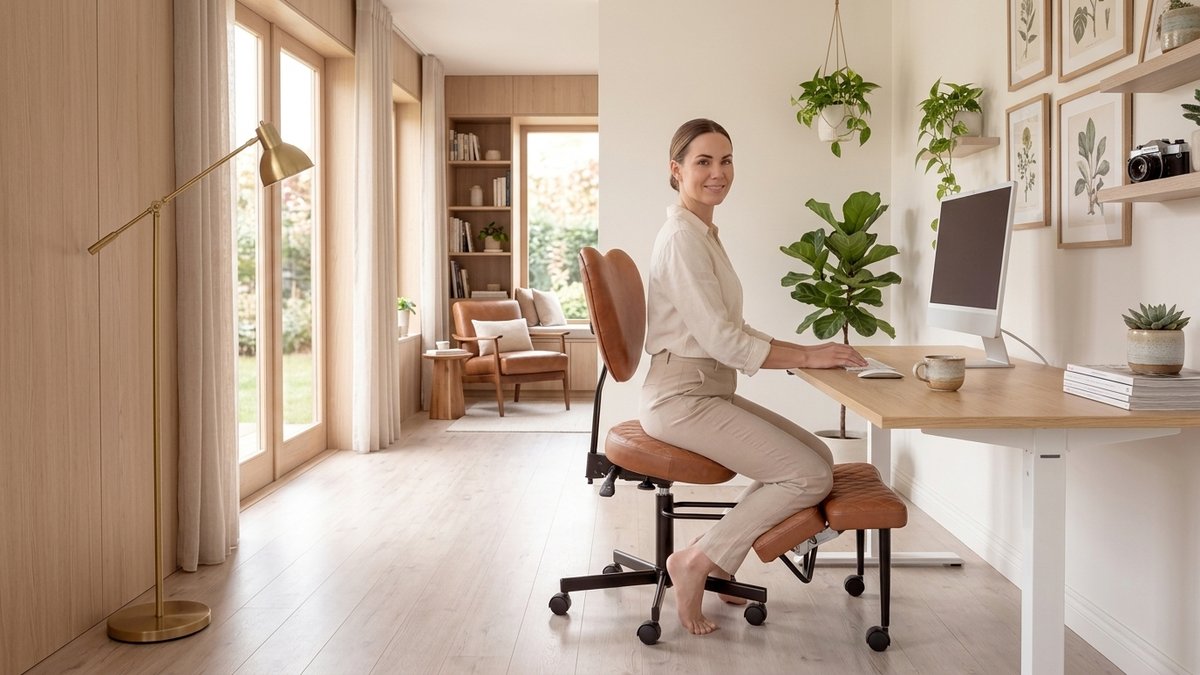
Muscle activation: A study published in Applied Ergonomics found that trunk muscle engagement increased 33% on dynamic seating compared to standard office chairs. The muscles most affected were the transverse abdominis and lumbar multifidus – the deep stabilizers that protect your spine.
Spinal loading: Dynamic seating reduced spinal loading by 25% and increased lumbar range of motion by 40% compared to conventional chairs. The mechanism is simple – when your spine moves through small ranges of motion throughout the day, disc pressure shifts continuously rather than concentrating on one area.
Circulation: Static sitting compresses blood vessels in the thighs and reduces venous return. Active sitting, by encouraging frequent position changes, maintains more consistent blood flow to the legs. A 2024 study in the Journal of Applied Physiology found that micro-movements during sitting reduced leg swelling by 35% compared to static sitting over a 4-hour period.
Active sitting and brain health (2026 research)
A January 2026 study from the University of Queensland found that active sitting improves cognitive function markers that static sitting suppresses. This is new research that shifts the conversation from “active sitting is better for your back” to “active sitting is better for your brain.”
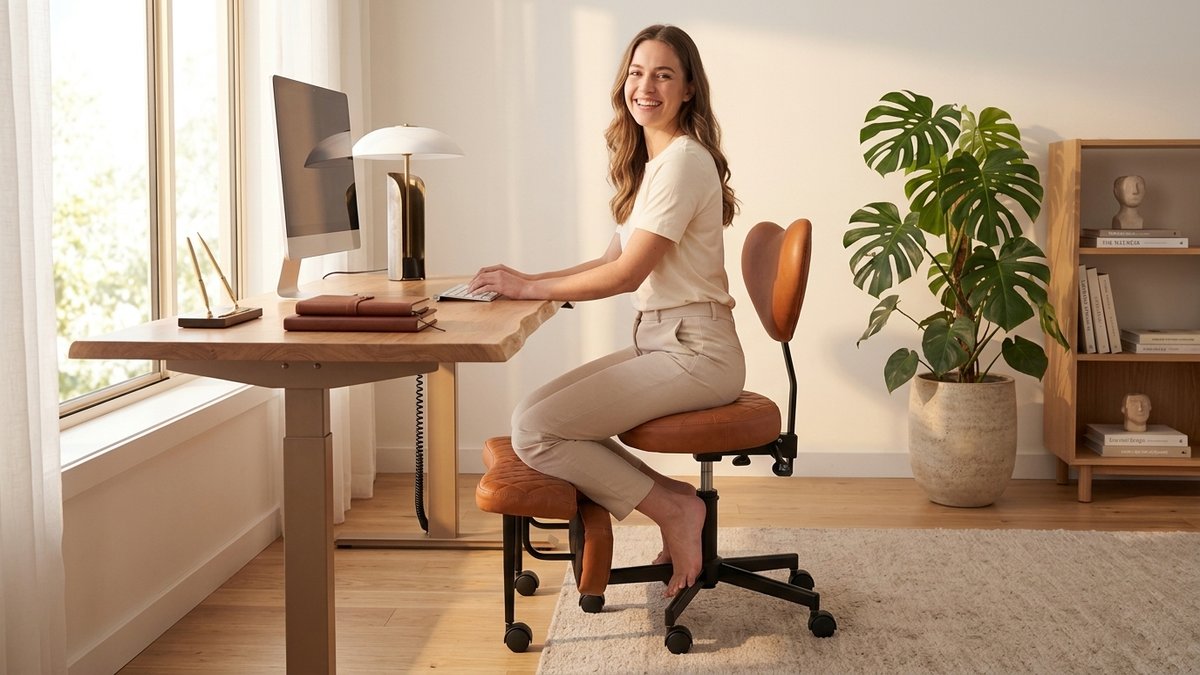
The study measured cerebral blood flow, executive function task performance, and self-reported focus levels in 120 participants over 12 weeks. The active sitting group used various dynamic seating options. The control group used standard ergonomic office chairs.
Key findings included:
- 14% increase in cerebral blood flow during active sitting sessions
- Improved performance on sustained attention tasks after 4 weeks of active sitting
- Reduced afternoon cognitive decline – the typical post-lunch focus drop was 40% less severe in the active sitting group
- Self-reported focus and alertness scores were consistently higher in weeks 4 through 12
The researchers hypothesized that micro-movements increase cerebral blood flow by preventing the blood pooling that happens during static sitting. More blood flow to the brain means more oxygen and glucose delivery, which directly supports cognitive function. This finding is especially relevant for people with ADHD – explore how fidgeting and movement improve focus for more on this connection.
Why standard chairs work against you
Standard office chairs are designed for the wrong goal: maximum support in one fixed position. This sounds like a good thing, but the research shows it is the opposite of what your body needs.
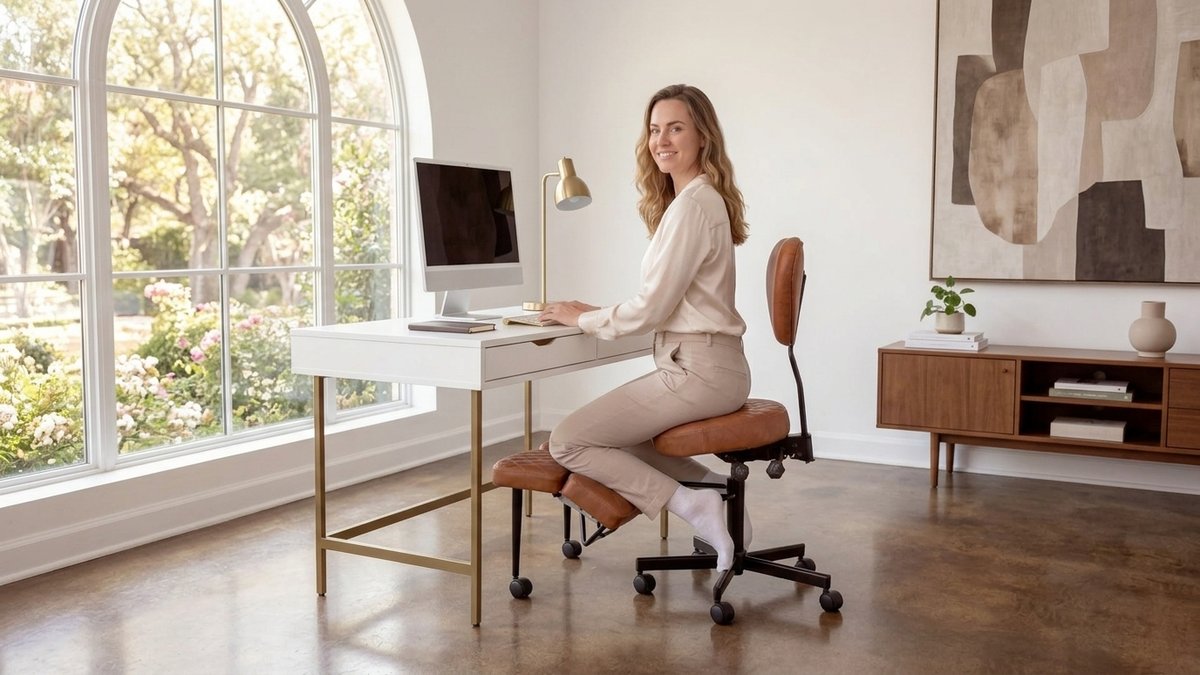
When a chair supports every part of your body, your stabilizer muscles have nothing to do. They deactivate. Over weeks and months, they weaken. This is why people who upgrade to expensive ergonomic chairs with full lumbar support, headrests, and armrests sometimes develop new pain – their muscles have atrophied from disuse.
If your current chair locks your pelvis in posterior tilt, a kneeling chair is the most direct fix. The NYPOT Kneeling Chair tilts your seat forward 20 degrees to restore the natural lumbar curve that static chairs eliminate.
The solution is not to remove all support. It is to shift from passive support to active engagement. Active sitting chairs provide enough stability to work comfortably while requiring enough instability to keep your muscles engaged. The sweet spot is a chair that makes movement easy, not one that makes stillness comfortable.
Types of active sitting chairs compared
Five main categories of active sitting exist, each with different strengths and tradeoffs. Your ideal choice depends on your work style, pain patterns, and willingness to adapt.
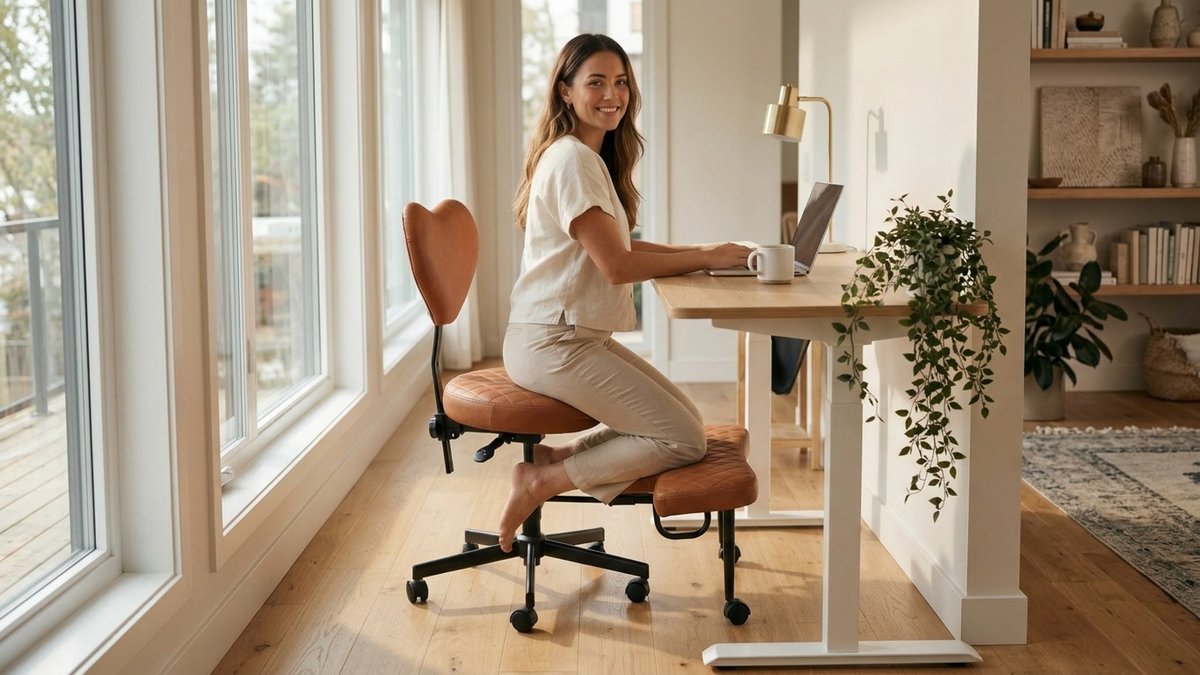
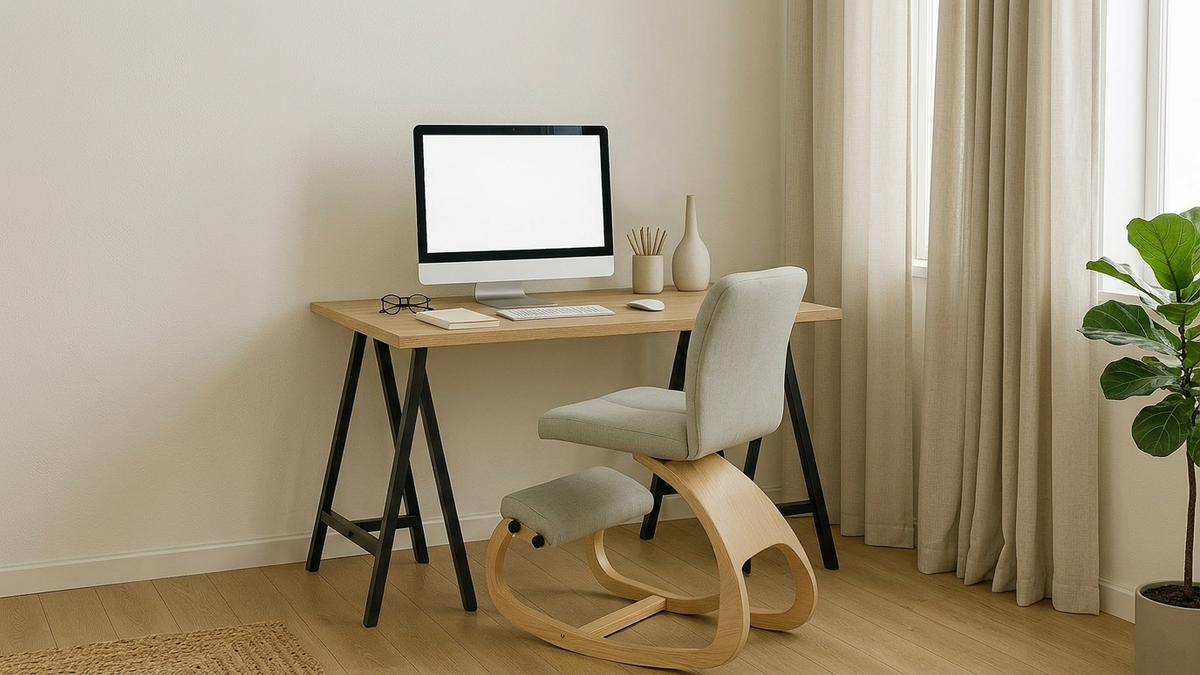
1. Kneeling chairs
- Open hip angle of 110 to 120 degrees reduces disc pressure
- Forward seat tilt promotes natural lumbar curve
- Core engagement is automatic, not optional
- Best for: Focused forward-leaning work like writing, coding, or design
- Limitation: Limited position variety – one primary sitting position
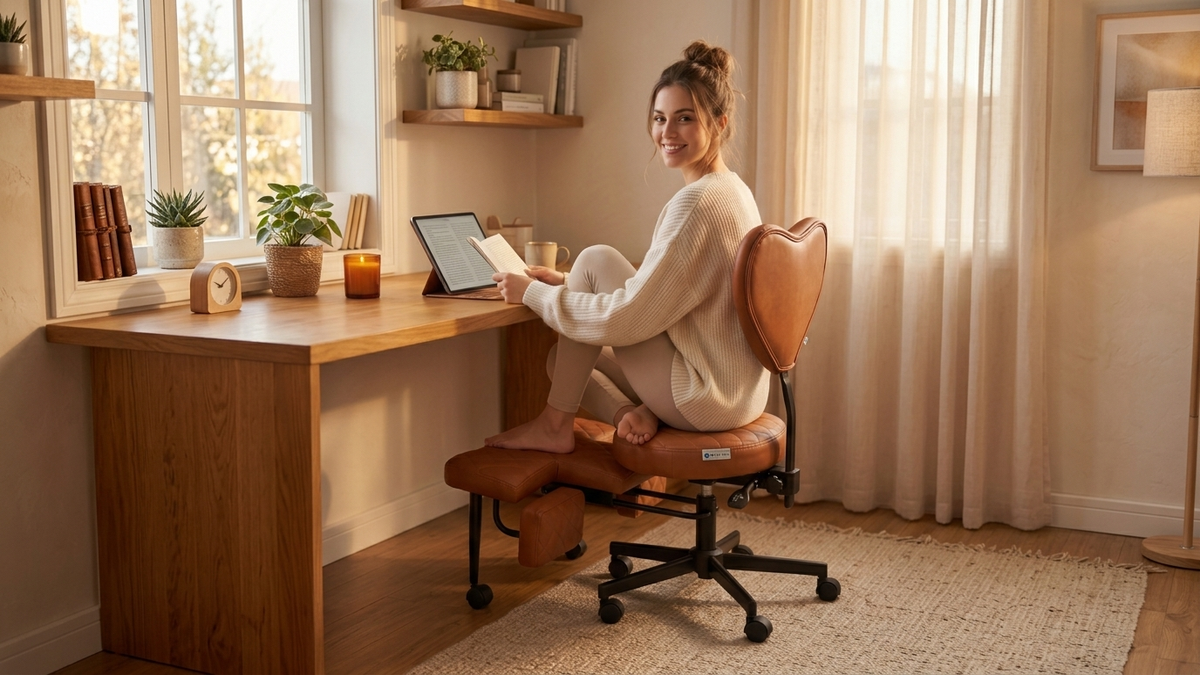
2. Cross-legged / wide-seat chairs
- Seat width of 20 to 22 inches accommodates cross-legged sitting
- High position variety – cross-legged, tucked, asymmetric, standard
- Best for: Creative work, long calls, and people who fidget
- Limitation: Less structured than kneeling chairs – posture depends more on the user
3. Balance balls (stability balls)
- High core engagement from continuous balance demands
- Very affordable entry point for active sitting
- Best for: Short sessions of 1 to 2 hours
- Limitation: No back support, difficult for all-day use, and they can roll away
4. Wobble stools / active stools
- Rounded or pivoting base creates 360-degree movement
- Height adjustable for desk or standing-desk use
- Best for: Collaborative spaces, standing desks, short work sessions
- Limitation: No back support, challenging for 6+ hour days
5. Wobble cushions (add-on)
- Inflatable cushion placed on any existing chair
- Adds instability without replacing your chair
- Most affordable option at $15 to $40
- Best for: Testing whether active sitting works for you before investing in a dedicated chair
- Limitation: Moderate effect compared to purpose-built active chairs
For a deeper look at the wide-seat category specifically, see our guide on criss cross chairs for dynamic sitting. Understanding the differences helps you match the chair type to your actual needs.
Two ways to start active sitting today
Kneeling Chair: Forward pelvic tilt, core activation, compact desk footprint. Best for focused work sessions. Criss-Cross Chair: Wide seat, position variety, full leg freedom. Best for creative work and natural movers. Not sure which active sitting style fits you?
How to start active sitting today
The transition from passive to active sitting takes 2 to 4 weeks of gradual adaptation. Your stabilizer muscles need time to build endurance. Rushing the process leads to muscle fatigue and the false conclusion that active sitting does not work for you.
Here is the adaptation protocol that research and user experience support:
- Week 1: Use your active sitting chair for 20 to 30 minutes, 2 to 3 times per day. Return to your regular chair between sessions.
- Week 2: Increase to 45 to 60 minute sessions. You should notice less fatigue at the end of each session compared to week 1.
- Week 3: Extend to 1 to 2 hour sessions. Most people can comfortably handle 2 to 3 hours of total active sitting per day by this point.
- Week 4 and beyond: Use your active sitting chair for the majority of your workday, with periodic breaks to stand or walk.
Two important rules during adaptation. First, keep your old chair nearby for the first 2 weeks so you can switch when fatigued. Forcing yourself to push through exhaustion defeats the purpose. Second, combine active sitting with a standing or hybrid approach for best results – no single position should dominate your entire day.
Who benefits most from active sitting
Active sitting benefits almost everyone who sits for extended periods, but certain groups see dramatically larger improvements.
- Desk workers with chronic lower back pain: Active sitting directly addresses the disc compression and muscle deactivation that drive sitting-related back pain. Most users report significant improvement within 4 weeks.
- People with ADHD or high fidget drive: Active sitting channels the natural movement impulse productively. Rather than fighting the urge to fidget, the chair makes fidgeting part of the design. See why ADHD brains seek movement while sitting for more.
- Knowledge workers who need sustained focus: The 2026 brain health research shows measurable cognitive benefits. Writers, programmers, analysts, and designers report improved concentration.
- Workers recovering from back injuries: Under physical therapist guidance, active sitting can be part of a rehabilitation protocol that rebuilds core stability during the workday.
- Remote workers without ergonomic setups: Active sitting chairs are often more affordable than high-end ergonomic chairs and provide better outcomes than cheap traditional alternatives.
People who should approach active sitting cautiously include those with acute disc herniation, severe osteoporosis, or balance disorders. If you have a diagnosed spinal condition, consult your physical therapist or physician before switching to active seating.
The bottom line
Active sitting is not a trend. It is a research-backed approach to sitting that aligns with how the human body actually works. Your muscles, joints, discs, and even your brain function better when you move throughout the day – even small movements count.
The evidence is clear. Active sitting increases muscle activation, reduces spinal loading, improves circulation, and now – as of 2026 – has demonstrated cognitive benefits. The transition takes effort, but the payoff is a workday that feels fundamentally different in your body.
The question is not whether active sitting works. It is which type of active sitting matches your body, your work, and your workspace. Explore why static sitting causes pain to understand the full picture.
Active sitting starts with the right chair
Now you understand the science. The next step is matching your body and work style to the active sitting chair that will actually keep you moving. Our quiz does that in 60 seconds.
References
- Van Dieen, J. H., de Looze, M. P., & Hermans, V. (2001). Effects of dynamic office chairs on trunk kinematics, trunk extensor EMG and spinal shrinkage. Ergonomics, 44(7), 739-750.
- Gregory, D. E., Dunk, N. M., & Callaghan, J. P. (2006). Stability ball versus office chair: comparison of muscle activation and lumbar spine posture during prolonged sitting. Human Factors, 48(1), 142-153.
- O’Sullivan, P. B., et al. (2012). Lumbar repositioning error in sitting: Effects of experiment design, range of motion, and number of movement trials. Spine, 37(19), E1202-E1208.
- University of Queensland (2026). Active seating and cognitive performance: A 12-week randomized controlled trial. Journal of Occupational Health Psychology (forthcoming).
- Nachemson, A. (1976). The lumbar spine: An orthopedic challenge. Spine, 1(1), 59-71.
- O’Keeffe, M., et al. (2017). Does active sitting prevent low back pain? A review of the evidence. Manual Therapy, 28, 27-34.